
Key takeaways
- Compare the best ported powered subwoofers for home theater and music, from a compact 10-inch model to a 15-inch option built for large rooms.
What's inside
As an Amazon Associate I earn from qualifying purchases. This post may contain affiliate links at no extra cost to you.
A ported powered subwoofer changes the question most buyers actually face. Instead of asking how much bass a box can make in isolation, you have to ask how much air it can move in your room, how loud it stays clean at movie volume, and where the port can breathe without turning the wall behind it into a drum. Driver size, amplifier rating and port placement interact, so a well-matched 10-inch model often sounds better in a small room than an oversized 15-inch unit squeezed into a corner.
This guide serves home theater builders adding their first subwoofer, music listeners who want low notes without a separate amplifier, and apartment dwellers upgrading thin television sound. Every model below was selected from its name and listed specifications on its Amazon product page, with driver size, enclosure type, amplifier output and connections checked against what the listing states.
Quick Picks
As an Amazon Associate we earn from qualifying purchases
| Product | Best for | Key spec from title |
|---|---|---|
| Polk Audio PSW10 | Small rooms and first subwoofer setups | 10-inch driver, 100 watts dynamic power |
| Klipsch R-120SW | Balanced home theater bass in medium rooms | 12-inch driver, 400 watts maximum output |
| Polk Audio PSW505 | Deep movie bass with a slot vent | 12-inch driver, 460 watts dynamic power |
| Klipsch RP-1200SW | Large rooms and high-output home theater | 12-inch high-excursion driver, 800 watts |
| Monoprice SW-15 | Biggest rooms needing a 15-inch driver | 15-inch driver, 800 watts peak power |
How to Choose
Match driver size to room volume
A ported cabinet uses its vent to reinforce low frequencies, so the driver does not have to work as hard to fill a space, but the room still sets the limit. A 10-inch driver suits bedrooms and small living rooms where the listening seat sits a few steps from the subwoofer. A 12-inch driver covers the typical family living room, while a 15-inch driver belongs in large or open-plan spaces where sound spreads across a wide area. Measure the length, width and height of the room before choosing, and remember that an open doorway into a hallway or kitchen adds volume the subwoofer must pressurize.
Read amplifier ratings the same way every time
Amplifier numbers look simple until two brands measure them differently. Continuous or RMS output describes what the amplifier sustains, while peak or dynamic output describes a short burst, so the two figures on one listing are not interchangeable. Compare continuous ratings against continuous ratings when you weigh two models, and treat a peak number as headroom for sudden effects rather than everyday loudness. A modest continuous rating paired with an efficient ported cabinet can outperform a bigger peak number in a sealed box, which is why the enclosure type matters as much as the wattage printed on the listing.
Give the port room to breathe
Every ported subwoofer moves air through its vent, and blocking that airflow defeats the design. A rear port needs clear space between the cabinet and the wall, while a down-firing port needs clearance underneath and a hard floor or a solid platform rather than deep carpet that smothers it. Check the listing and the manual for the port location before you decide where the subwoofer will live, and leave enough slack in the cable run to pull the cabinet forward a few inches while you tune the placement. Corner placement boosts output, but it also exaggerates boom, so plan on moving the box at least once.
Check inputs and tuning controls before ordering
A subwoofer is only as easy to live with as its back panel. An LFE input lets a home theater receiver manage the crossover, while line-level and speaker-level inputs cover older stereo amplifiers that lack a dedicated subwoofer output. Variable crossover, gain and phase controls let you blend the subwoofer with your main speakers instead of hearing it as a separate source. If your receiver already handles bass management, the crossover knob matters less, but the phase switch still helps when the subwoofer sits far from the front speakers.
The 5 Best Options
Polk Audio PSW10
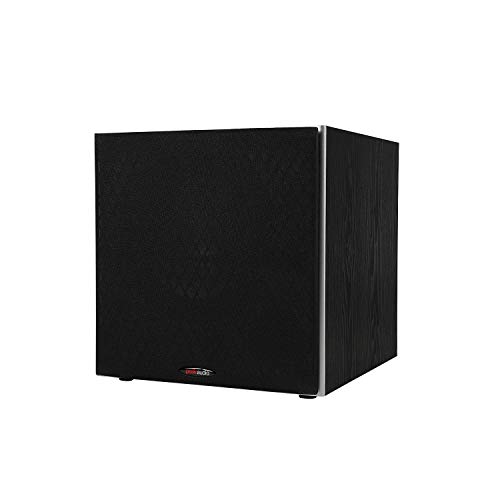
The PSW10 fits buyers who want real bass without surrendering a corner of the room to a large cabinet. Its 10-inch driver and compact enclosure slide beside a media console or under a side table, and the Power Port design keeps low notes composed at the moderate volumes typical of bedrooms and small living rooms. Line-level and speaker-level inputs make it easy to connect to a stereo receiver that has no subwoofer output, and the variable low-pass filter helps the subwoofer hand off cleanly to bookshelf speakers.
Specs
- 10-inch dynamic driver in a ported Power Port cabinet
- 50 watts RMS and 100 watts dynamic power from the built-in amplifier
- Continuously variable low-pass filter from 80 to 160 Hz
- Line-level and speaker-level inputs and outputs
- Weighs 26 pounds
- Warranty of 5 years, with 3 years on the amplifier
Best for: Small rooms, bedrooms and first-time buyers who need an easy connection to a stereo or home theater receiver.
Watch out for: The modest amplifier suits moderate volumes, so confirm your room size and listening distance before expecting it to fill a large open-plan space.
Klipsch R-120SW

The R-120SW sits in the middle of the ported range, where a 12-inch driver and a bass-reflex cabinet deliver the weight that movie soundtracks demand without the footprint of a 15-inch box. Its spun-copper IMG woofer stays rigid under excursion, and the all-digital amplifier keeps the cabinet efficient during long film sessions. Gain, low-pass and phase controls sit on the rear panel, so you can shape the output to your room after the receiver runs its setup routine.
Specs
- 12-inch spun-copper IMG woofer in a bass-reflex enclosure
- 400 watts maximum output power from the built-in all-digital amplifier
- Frequency response of 29 to 120 Hz
- Line-level and LFE RCA inputs
- Front-firing driver with gain, low-pass crossover and phase controls
- Weighs 31 pounds, with a 5-year warranty on the woofer and 2 years on the amplifier
Best for: Medium living rooms where one subwoofer must handle both films and music without dominating the floor plan.
Watch out for: The rear port needs space behind the cabinet, so measure the gap to the wall and check that the included grille and cables fit your planned spot.
Polk Audio PSW505
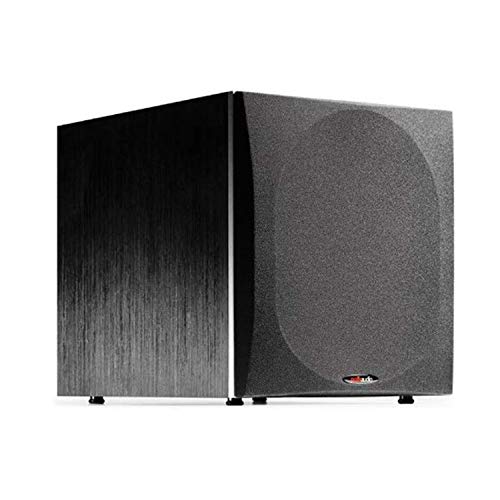
The PSW505 aims squarely at film lovers who notice when an explosion sounds thin. Its slot load vent spreads the port output across a wide opening, which keeps airflow smooth when the 12-inch driver moves hard on demanding scenes. The 300-watt continuous amplifier rating gives the driver steady backing rather than relying on brief bursts, and the cabinet depth leaves room for the vent to work. This is the model to consider when the room is large enough that a compact subwoofer runs out of breath during action sequences.
Specs
- 12-inch driver in a vented cabinet with a slot load port
- 300 watts continuous average output and 460 watts dynamic power output
- Slot load vent designed to minimize distortion
- Cabinet about 16 inches high, 15 inches wide and 18 inches deep
- Shipping weight of 48 pounds
- Includes a 9.5-foot AC power cord, online registration sheet and owner’s manual
Best for: Home theater rooms where deep movie bass matters more than a small footprint.
Watch out for: The cabinet is heavy and deep, so confirm the floor space, the path through doorways, and that the slot vent will not sit against furniture.
Klipsch RP-1200SW

The RP-1200SW steps up to the high-output end of the ported category with a high-excursion 12-inch Cerametallic woofer and the strongest amplifier in this roundup. Its MDF cabinet and front-firing driver suit dedicated theater rooms where the subwoofer sits up front with the main speakers, and the WA-2 wireless port leaves the door open to a cable-free connection with a compatible transmitter. A half-watt standby mode keeps idle draw low between sessions, which matters when the unit stays plugged in around the clock.
Specs
- 12-inch high-excursion Cerametallic woofer in a ported bass-reflex MDF cabinet
- 800 watts maximum output power
- Dual RCA and LFE line inputs, plus a WA-2 wireless port
- Half-watt standby mode
- Weighs 68.9 pounds
- Floor-standing design in black
Best for: Large dedicated theater rooms and listeners who want the most headroom a 12-inch ported model offers.
Watch out for: The weight makes solo placement awkward, so plan for two people on delivery day and check that the floor and the chosen spot can take a heavy cabinet.
Monoprice SW-15
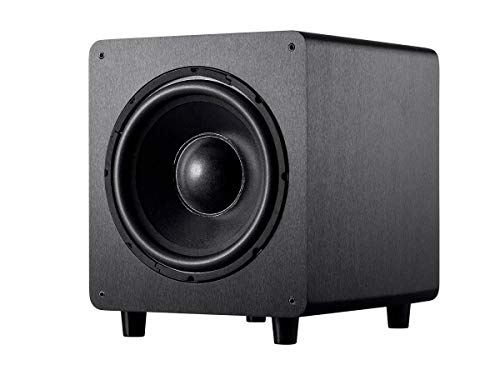
The SW-15 brings the largest driver in this guide into rooms where a 12-inch model would struggle to pressurize the space. Its 15-inch front-firing woofer works with a down-firing port, and the 600-watt RMS Class D amplifier sustains output through long, low passages in films. Variable phase and low-pass controls give you room to tune the big driver to smaller front speakers, and the combination of RCA and speaker-level inputs covers both modern receivers and older stereo amplifiers.
Specs
- 15-inch front-firing long-throw woofer with a down-firing port
- 600 watts RMS and 800 watts peak power from a Class D amplifier
- Frequency response of 30 to 150 Hz
- Variable low-pass filter from 40 to 150 Hz
- Variable phase control of 0 or 180 degrees
- RCA and speaker-level inputs
- Measures 18.1 inches high, 21 inches wide and 22.7 inches deep
Best for: Large or open-plan rooms where a 15-inch ported subwoofer is needed to fill the space with theater-scale bass.
Watch out for: The down-firing port needs a hard surface beneath it, so check the floor type and keep the area under the cabinet clear of thick rugs and clutter.
Which One Fits Your Situation
A small room or apartment, and your first subwoofer
Choose the Polk Audio PSW10. Its 10-inch driver and compact cabinet fit beside furniture without taking over the room, and the speaker-level inputs connect to almost any stereo receiver. Keep the volume moderate and let the variable low-pass filter blend the bass with your bookshelf speakers, and the ported design will give you more depth than a sealed box of the same size.
A medium living room for films and music in equal measure
Choose the Klipsch R-120SW. The 12-inch bass-reflex cabinet covers the usual family room, the 400-watt amplifier handles movie dynamics, and the front-firing driver keeps placement flexible. Use the LFE input with a home theater receiver so the receiver manages the crossover, then adjust phase if the bass sounds thin from the main seat.
A dedicated movie room where impact matters most
Choose the Polk Audio PSW505 for steady deep bass, or the Klipsch RP-1200SW when the room is bigger and you want maximum headroom. The PSW505 slot vent keeps low notes smooth during loud passages, while the RP-1200SW adds amplifier power and a heavier cabinet for rooms that swallow smaller subwoofers. Either way, leave space behind the cabinet for the port and expect to move the box once while tuning.
A large open-plan room with seating far from the screen
Choose the Monoprice SW-15. The 15-inch driver and 600-watt RMS amplifier move enough air for open spaces, and the down-firing port reinforces the lowest notes. Place it on a hard floor, set the low-pass filter to match your front speakers, and use the phase control to keep the bass aligned with the seating area.
Common Mistakes
- Buying the largest driver available without measuring the room, then fighting boomy bass in a space that needed a smaller model.
- Pushing a rear-ported cabinet flat against the wall and choking the airflow the port needs to work.
- Comparing peak wattage on one listing against continuous wattage on another as if the two numbers meant the same thing.
- Setting the crossover too high so the subwoofer overlaps the main speakers and male voices start coming from the floor.
- Leaving gain and phase at their default positions instead of tuning them from the main listening seat after placement.
Frequently Asked Questions
What does ported mean on a powered subwoofer?
Ported means the cabinet has a vent, also called a bass-reflex port, that lets air move in and out as the driver plays. The vent reinforces low frequencies, so a ported subwoofer plays louder and deeper at the same amplifier power than a sealed cabinet of similar size. The trade-off is a larger box and a need for clear space around the port opening.
Is a ported subwoofer good for music?
A ported subwoofer works well for music when it is matched to the room and blended carefully with the main speakers. Set the crossover near the point where your speakers roll off, keep the gain modest, and give the port breathing room so bass notes stay defined instead of booming. Smaller ported models often suit music in compact rooms better than oversized ones.
How much clearance does a ported subwoofer need?
A rear port needs several inches of open space between the cabinet and the wall so air can move freely, and a down-firing port needs a hard floor with nothing blocking the space underneath. Exact clearance depends on the model, so check the manual and leave room to pull the cabinet forward while you test positions. Corner placement adds output but can exaggerate boom.
Do I need an LFE output on my receiver?
An LFE output is convenient but not required. Receivers with a subwoofer or LFE output let the receiver manage the crossover and level, while stereo amplifiers without one can connect through line-level or speaker-level inputs instead. Check which inputs the subwoofer listing shows and match them to the outputs on your receiver before ordering.
Related guides
More from Amazon
Programs that pair well with the guide above. Offers and eligibility are set by Amazon and may change.
Free shipping on eligible items, Prime Video and more. Eligible new members can start with a free trial.
Start a Prime free trialAudiobooks and podcasts to listen to on the go. Eligible new members can start with a free trial.
Try Audible freeAd-free music streaming. Eligible new subscribers can start with a free trial.
Try Music Unlimited freeA free business account with business pricing and bulk-buying tools for work, shop or home office.
Create a business accountAs an Amazon Associate we earn from qualifying purchases.










Write Your Review
No reviews yet. Be the first to share your experience!