
Key takeaways
- Compare the 5 best 15-inch powered subwoofers for low-frequency upgrades, with real specs, room fit, and setup guidance for deeper home theater bass.
What's inside
As an Amazon Associate I earn from qualifying purchases. This post may contain affiliate links at no extra cost to you.
A low-frequency upgrade is not about adding more noise to a room. It is about hearing and feeling the part of a movie or a song that a smaller subwoofer simply gives up on: the deep rumble of a storm, the weight under a bass line, the pressure of an explosion that arrives in the chest before it registers in the ears. Moving to a 15-inch powered subwoofer is the point where that bottom octave stops being a suggestion and starts being a physical presence in the room.
This guide is for home theater owners replacing a compact subwoofer, music listeners whose current unit runs out of depth on demanding tracks, and anyone building a larger room system from the start. Each pick below was chosen from the model name and specifications shown on its Amazon listing, with the driver size, amplifier type, and frequency range taken from that listing rather than from guesswork.
Quick Picks
As an Amazon Associate we earn from qualifying purchases.
| Product | Best for | Key spec from title |
|---|---|---|
| Monoprice Monolith M-15 V2 | Deepest home theater upgrade in a large room | 15-inch THX Certified Ultra 1000-watt powered subwoofer |
| Klipsch SPL-150SW | Big-room movie bass with a classic horn-brand sound | 15-inch powered subwoofer with 400-watt RMS Class D amplifier |
| Klipsch R-115SW | Replacing an older Reference subwoofer with a known quantity | 15-inch Reference powered subwoofer with 800-watt dynamic power |
| Dayton Audio SUB-1500 | A low-cost first step into 15-inch bass | 15-inch 150-watt powered subwoofer |
| Rockville Rock Shaker 15 | Budget home theater and studio bass on a tight spend | 15-inch powered subwoofer with 1000-watt peak and 500-watt RMS power |
How to Choose
Match the subwoofer to the size of the room
A 15-inch driver moves far more air than a 10-inch or 12-inch unit, and that advantage only shows itself when the room is large enough to let low frequencies develop. In a small bedroom or a compact apartment living room, a big ported cabinet can overwhelm the space and make bass sound boomy rather than deep. Measure the room first, then check the cabinet dimensions on the listing. A subwoofer that needs a corner or a long wall to breathe will disappoint if it ends up squeezed behind a sofa. Large open-plan living rooms, dedicated media rooms, and basement theaters are where the extra displacement earns its keep.
Read the low-frequency extension, not just the wattage
Wattage numbers attract attention, but the frequency range tells you how deep a subwoofer actually plays. A listing that reaches down to 16 Hz or 18 Hz is describing usable output well below what most compact subwoofers manage, and that is exactly what a low-frequency upgrade is supposed to buy. Compare the bottom number across listings, and treat a model that only lists a peak wattage figure with no frequency range as an incomplete picture. The amplifier rating matters for headroom and clean output at volume, yet it cannot rescue a driver and cabinet combination that rolls off early.
Decide between ported output and sealed control
Most 15-inch powered subwoofers in this class use a ported cabinet, which trades some cabinet size for extra output in the deepest octave. That design suits movie soundtracks, where sudden low-frequency effects benefit from the added efficiency. A sealed design, by contrast, tends to sound tighter and more controlled on music, with a more gradual roll-off that some listeners prefer for bass guitar and kick drums. Neither approach is wrong. The right choice depends on whether the system spends most of its hours on films or on music, and on how much floor space the cabinet is allowed to take.
Check the connections and controls before ordering
An upgrade only works if the new subwoofer talks to the equipment already in the rack. Look for an LFE or RCA line-level input that matches the subwoofer output on the receiver, and confirm whether speaker-level inputs are present for older stereo amplifiers without a dedicated subwoofer output. Gain, crossover, and phase controls on the rear panel are the tools that blend the subwoofer with the main speakers, so their presence matters more than any single specification. A wireless kit option can help when running a cable across the room is impractical, but it should be treated as a convenience, not a substitute for correct placement.
The 5 Best Options
Monoprice Monolith M-15 V2

The M-15 V2 is the most serious low-frequency upgrade in this group, built around a 15-inch high-excursion driver and a 1000-watt RMS Class D amplifier with Texas Instruments digital signal processing. Its listed frequency response reaches down to 16 Hz, which is the kind of extension that turns movie bass from something heard into something felt. THX Certified Ultra status signals that the design was built for large rooms and high output, and the front-firing ports keep placement against a wall practical. This is the pick for a dedicated theater where deep extension is the entire point.
Specs
- 15-inch high-excursion driver
- 1000-watt RMS Class D amplifier with Texas Instruments 48-bit DSP
- Frequency response of 16 Hz to 200 Hz
- THX Certified Ultra
- Gain, low-pass filter, phase, EQ mode, and power controls
Best for: Large home theaters where the deepest movie effects are the priority.
Watch out for: The cabinet is very large and heavy, so measure the intended spot and plan for two people to move it into place.
Klipsch SPL-150SW

The SPL-150SW is Klipsch’s largest subwoofer in its SPL series, pairing a 15-inch driver with a 400-watt RMS Class D amplifier rated at 800 watts peak. Klipsch lists infrasonic performance down to 16 Hz, which puts it in the same deep-bass conversation as far more expensive theater subwoofers. The ebony vinyl cabinet and copper-colored driver keep the familiar Klipsch look, and the front-firing design works well in a living room where the subwoofer sits beside the television. It is a straightforward choice for buyers who already own Klipsch speakers and want matching character.
Specs
- 15-inch powered subwoofer
- Class D amplifier with 400 watts RMS and 800 watts peak
- Infrasonic performance down to 16 Hz
- Ebony vinyl finish
- Front-firing driver and port layout
Best for: Living room theaters where deep movie bass should blend with existing Klipsch speakers.
Watch out for: Some sources describe this model as replaced by a newer Klipsch line, so confirm the listing shows new stock from a seller you trust before ordering.
Klipsch R-115SW

The R-115SW is the Reference-series 15-inch subwoofer that many home theater owners already know, built around a 15-inch spun-copper Cerametallic driver that Klipsch describes as light yet extremely rigid. Its all-digital amplifier delivers 400 watts RMS and 800 watts of dynamic power, with a listed frequency response of 18 Hz to 125 Hz and a maximum acoustic output of 122 dB. A front-firing slot port keeps the cabinet flexible about placement, and the gain, phase, and low-pass controls on the rear panel cover the basics of blending with main speakers. It suits a buyer replacing an older Reference subwoofer without relearning a new system.
Specs
- 15-inch spun-copper Cerametallic driver
- All-digital amplifier with 400 watts RMS and 800 watts dynamic power
- Frequency response of 18 Hz to 125 Hz
- Maximum acoustic output of 122 dB
- Front-firing slot port
Best for: Owners of Klipsch Reference systems who want a like-for-like 15-inch replacement.
Watch out for: This is an older Reference model, so listings may be remaining stock or third-party sellers; check the seller and the stated condition carefully.
Dayton Audio SUB-1500
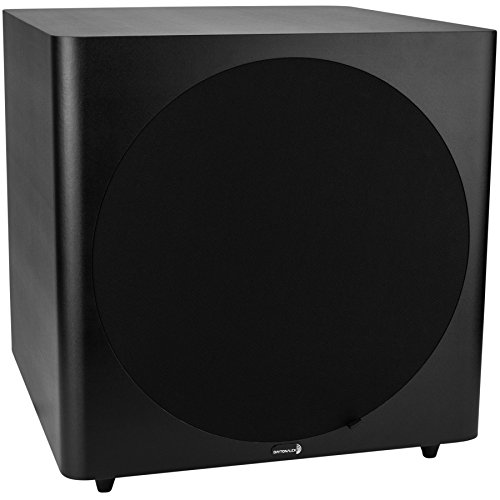
The SUB-1500 is the most affordable way into a genuine 15-inch powered subwoofer, built around a heavy-duty 15-inch driver and a 150-watt amplifier. It will not match the output or extension of the larger amplifiers in this guide, but it moves substantially more air than the 8-inch or 10-inch subwoofers it typically replaces, and that alone transforms a modest system. The simple control set keeps setup approachable for a first upgrade, and the cabinet is less imposing than the theater-grade models. For a budget living room or a bedroom theater, it delivers the size upgrade without the sizeable spend.
Specs
- 15-inch powered subwoofer
- 150-watt amplifier
- Heavy-duty 15-inch driver
- Powered design with built-in amplifier
- Compact cabinet for its driver size
Best for: Budget buyers making their first move from a small subwoofer to a 15-inch driver.
Watch out for: Amazon tracking shows the listing supplied mainly by third-party sellers rather than Amazon itself, so confirm availability and the seller before ordering.
Rockville Rock Shaker 15

The Rock Shaker 15 is a recent budget entry that pairs a 15-inch driver with a Class D amplifier rated at 1000 watts peak and 500 watts RMS. The listing describes an MDF enclosure with RCA and speaker-level inputs, plus phase and crossover controls for blending with the rest of the system. That combination of inputs makes it unusually flexible for the money, working with both a modern receiver and an older stereo amplifier. It is aimed squarely at home theater and studio use, where a large driver and a simple control set matter more than brand heritage.
Specs
- 15-inch powered subwoofer
- 1000 watts peak and 500 watts RMS Class D amplifier
- MDF enclosure
- RCA and speaker-level inputs
- Phase and crossover controls
Best for: Budget home theater and studio setups that need a large driver and flexible connections.
Watch out for: Rockville is a value brand rather than a specialist theater name, so set expectations for refinement accordingly and keep the packaging until the unit has been run for a few days.
Which One Fits Your Situation
Upgrading a dedicated theater room
Choose the Monoprice Monolith M-15 V2. Its 16 Hz extension and 1000-watt RMS amplifier are built for the scale of a dedicated room, and the THX Certified Ultra rating matches the output a large space demands. Give it a corner or a front-wall position and enough clearance for the ports to breathe.
Replacing a smaller subwoofer in the living room
Choose the Klipsch SPL-150SW or the R-115SW. Both bring a 15-inch driver and deep extension into a living room without demanding a theater-grade budget, and both blend naturally with Klipsch main speakers. Pick the SPL-150SW for the deeper listed extension and the R-115SW when matching an existing Reference system matters more.
Making the jump on a tight budget
Choose the Dayton Audio SUB-1500 or the Rockville Rock Shaker 15. The Dayton is the cheapest path to a 15-inch driver, while the Rockville adds more amplifier power and speaker-level inputs for older equipment. Either one is a clear step up from a compact subwoofer, and the Rockville is the better pick when the amplifier driving the mains has no subwoofer output.
Building a music-first system that still handles movies
Choose the Klipsch R-115SW. Its front-firing slot port and 18 Hz to 125 Hz response give music a solid foundation without the sheer size of the Monolith, and the gain and crossover controls make it easy to dial back for late-night listening. It keeps bass present and controlled rather than overwhelming the room.
Common Mistakes
- Buying a 15-inch subwoofer for a small room and then fighting boom and standing waves that a 12-inch unit would have avoided.
- Comparing peak wattage figures across brands while ignoring the frequency range, which is what actually defines a low-frequency upgrade.
- Placing the subwoofer where it fits the furniture instead of testing two or three positions, since placement changes deep bass more than any control knob.
- Skipping the crossover setting and leaving the subwoofer overlapping the main speakers, which muddies dialogue and mid-bass.
- Ordering without checking the cabinet dimensions and weight, then discovering the unit will not fit through the door or into the intended corner.
Frequently Asked Questions
Is a 15-inch powered subwoofer too big for a living room?
It depends on the room rather than the label. A 15-inch driver suits open-plan living rooms and larger spaces where low frequencies have room to develop. In a compact room, the same subwoofer can sound boomy, so measure the space and check the cabinet dimensions on the listing before ordering.
What makes a 15-inch subwoofer a low-frequency upgrade?
A larger driver moves more air with less effort, which lets it reproduce lower frequencies at useful volume. The models in this guide list extension down to 16 Hz or 18 Hz, well below the range where most compact subwoofers roll off, and that extra octave is the upgrade itself.
Do I need a separate amplifier for a powered subwoofer?
No. A powered subwoofer has its own amplifier built in, so it only needs a line-level signal from the receiver or a speaker-level connection from a stereo amplifier. The amplifier ratings in this guide describe the built-in unit, not an external purchase.
Can one 15-inch subwoofer replace two smaller ones?
For many rooms, yes. A single 15-inch unit usually delivers deeper extension and higher output than a pair of compact subwoofers. Two subwoofers can still smooth bass across more seats, so a second matching unit remains a worthwhile later addition in a large or oddly shaped room.
Related guides
More from Amazon
Programs that pair well with the guide above. Offers and eligibility are set by Amazon and may change.
Free shipping on eligible items, Prime Video and more. Eligible new members can start with a free trial.
Start a Prime free trialAudiobooks and podcasts to listen to on the go. Eligible new members can start with a free trial.
Try Audible freeAd-free music streaming. Eligible new subscribers can start with a free trial.
Try Music Unlimited freeA free business account with business pricing and bulk-buying tools for work, shop or home office.
Create a business accountAs an Amazon Associate we earn from qualifying purchases.










Write Your Review
No reviews yet. Be the first to share your experience!