
Key takeaways
- Find the best bedroom air purifier for dust allergies with five HEPA picks sized for bedding dust, mite debris and overnight low-noise running.
What's inside
As an Amazon Associate I earn from qualifying purchases. This post may contain affiliate links at no extra cost to you.
Bedroom dust is a bedding problem before it is an air problem. Pillows, duvets and mattresses hold a steady load of fine dust and mite debris, and every bed-making, sheet change and pillow fluff throws some of it back into the air you breathe overnight. The real decision is which purifier can pull that dust down while you sleep, hour after hour through the night, without noise that wakes you or a filter routine you will soon abandon.
This guide serves three groups: light sleepers who need low overnight noise, households with large primary bedrooms and heavy bedding dust, and anyone in a smaller room who wants simple controls. Every pick below comes from names and specifications on the Amazon product pages, matched to bedroom dust rather than whole-home use.
Quick Picks
As an Amazon Associate we earn from qualifying purchases
| Product | Best for | Key spec from title |
|---|---|---|
| Blueair DustMagnet 5440i | Bedrooms where dust settles on surfaces fast | Cleans up to 1,713 Sq ft |
| Honeywell HPA200 | Medium bedrooms up to 310 sq ft | HEPA Air Purifier for Large Rooms 1500 sq ft |
| Levoit LV-H133 | Large bedrooms and open sleeping areas | True HEPA Filter, 538 Sq. Ft |
| Honeywell HPA100 | Smaller bedrooms up to 155 sq ft | Cleans Up To 750 Sq Ft in 1 Hour |
| Winix 5300-2 | Medium bedrooms wanting auto mode | True HEPA, PlasmaWave |
How to Choose
Match CADR and coverage to the bedroom, with headroom
Dust control depends on how often the purifier moves the full volume of room air. A unit sized only just at your floor area will run hard and loud to keep up after bed-making lifts dust off bedding. Pick coverage above your room size so a mid fan speed still gives frequent air changes. For example, a 200 sq ft bedroom pairs well with a purifier whose listing covers 310 sq ft or more, leaving a quieter speed in reserve for overnight use.
Put the prefilter routine at the center for dust-heavy rooms
In a dust-led bedroom, the prefilter does the early heavy work. It catches lint, hair and coarse dust from bedding before that load reaches the main filter, and a clogged prefilter cuts airflow for the whole machine. Washable or vacuum-cleanable prefilters suit rooms where sheets are changed often and beds are made daily. Plan a quick clean every few weeks, and check the listing for how the prefilter comes out, because a fiddly panel is a routine few people keep.
Check the filter grade and what the listing says it captures
Dust-mite allergen rides on mite debris and droppings that settle into bedding and carpets, then go airborne when disturbed. Look for a listing that names HEPA filtration and lists dust and dust mite debris among the particles it captures, with a stated particle size such as 0.3 micron or 0.1 micron. That tells you the filter is built for fine debris rather than only coarse lint. Avoid vague claims with no filter grade, no particle size and no named particle list on the page.
Plan for continuous running while the room is occupied
A bedroom purifier earns its keep by running for hours, including all night while the room is occupied. Check the listing for a sleep or low-noise mode, a stated decibel figure, and auto mode with an air quality sensor that lifts fan speed when dust rises and eases back when air clears. Timer and dimmed display controls also matter in a sleeping room. A purifier that is too loud on the speed you need will end up switched off, and off cleans nothing.
The 5 Best Options
Blueair DustMagnet 5440i
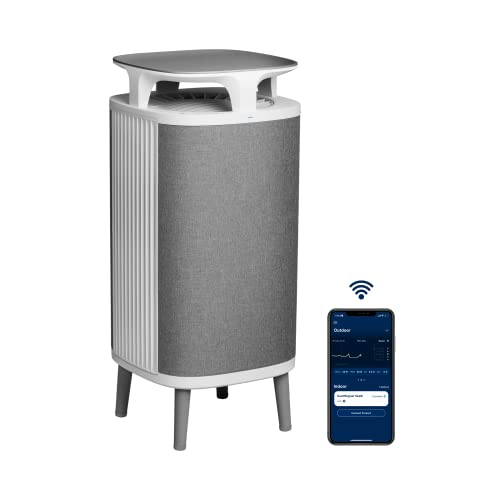
Choose this one when dust on shelves and nightstands is your main complaint. Its DustMagnet technology is built to pull airborne dust in before it settles, which suits bedrooms where bedding sheds fine particles through the night. HEPASilent filtration, auto mode and voice control through Alexa or Google Home let it run continuously with little input from you, and the flat top doubles as a small side surface beside the bed. It fits a medium bedroom that needs steady dust capture plus a calm, furniture-like presence.
Specs
- Coverage: cleans up to 1,713 sq ft in 1 hour
- Filtration: HEPASilent with DustMagnet technology
- Control: Amazon Alexa and Google Home voice control, auto mode
- Noise level: 49 decibels
- Particle retention size: 0.1 micron
- Wattage: 7 watts
Best for: Medium bedrooms where settled dust on furniture is the visible problem.
Watch out for: Confirm the 5400 series ComboFilter replacement fits your buying plan, since this line uses its own filter format.
ASIN: B08GDCQGSJ
Honeywell HPA200
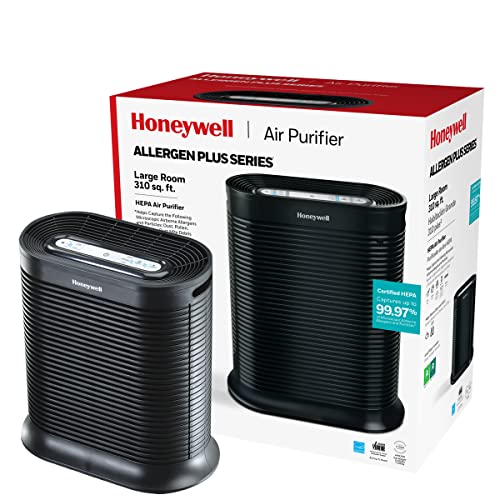
Pick the HPA200 for a straightforward medium bedroom where you want named dust and mite debris capture without app setup. The listing states its HEPA filter helps capture airborne particles including dust, pollen and dust mite debris, and the room guidance of 310 sq ft with up to 4.8 air changes an hour suits many main bedrooms. Touch controls, a filter change indicator and a 2, 4 or 8 hour shut-off timer keep daily use simple, and the allergen and general cleaning levels give you a higher gear after sheet changes.
Specs
- Room size: 310 sq ft, filters and circulates air up to 4.8 times an hour
- Filtration: HEPA with activated carbon pre-filter
- Capture list includes dust, dust mite debris, pollen and smoke
- Particle retention size: 0.3 micrometer
- Controls: touch controls, filter change indicator, 2, 4 or 8 hour timer
- Weight: 13.91 pounds
Best for: Medium bedrooms up to 310 sq ft that need simple, button-led dust control.
Watch out for: The listing shows a 60 decibel noise level, so check the lower speeds suit your sleep before relying on turbo overnight.
ASIN: B00BWYO3EM
Levoit LV-H133
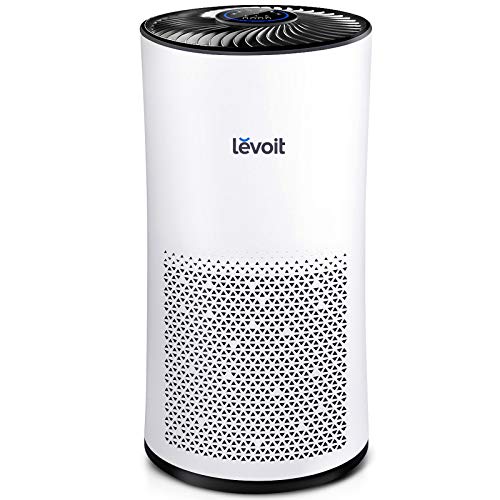
Pick the LV-H133 when the bedroom is large, open to a dressing area, or shared, and bedding dust arrives from more than the bed alone. Its tower body pulls air through a fine preliminary filter, a True HEPA filter and an activated carbon filter, and the listing names dust among the particles the HEPA stage removes down to 0.3 microns. A dust sensor with an air quality display and auto mode lift the fan when bed-making stirs particles up, while the lowest noise figure of 25dB suits overnight running on a low speed.
Specs
- Coverage: up to 538 sq ft per the listing
- CADR: 235 CFM
- Filtration: fine preliminary filter, True HEPA filter, activated carbon filter
- Noise: lowest level 25dB
- Controls: touch control, auto mode, dust sensor with air quality display
- Power: 33W rated, AC 120V 60Hz
Best for: Large bedrooms and open sleeping areas that need tower coverage with a low overnight speed.
Watch out for: Measure the floor spot first, since the tower stands about 23.6 inches tall and needs open space around the body for airflow.
ASIN: B07CNQQM9N
Honeywell HPA100
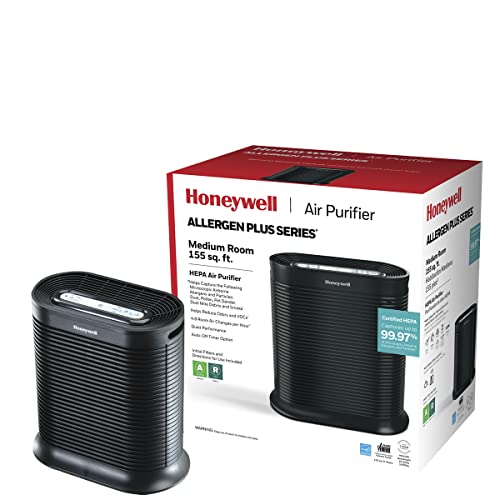
Choose the HPA100 for a smaller bedroom, guest room or nursery corner where the dust load is real but the floor area is modest. The listing recommends it for medium rooms of 155 sq ft and says the HEPA filter helps capture up to 99.97 in 100 of microscopic airborne particles 0.3 microns and larger, naming dust in its capture list alongside pollen, pet dander and smoke. Touch controls, named cleaning levels and a filter change indicator keep nightly running simple without an app or voice assistant.
Specs
- Room size: 155 sq ft recommended, filters and circulates air up to 4.8 times an hour
- Coverage claim: cleans up to 750 sq ft in 1 hour per the listing title
- Filtration: HEPA with activated carbon pre-filter
- Capture list includes dust, pet dander, pollen and smoke
- Particle retention size: 0.3 micron
- Noise level: 60 decibels
- Wattage: 80 watts
- Controls: touch controls, filter change indicator
Best for: Smaller bedrooms up to 155 sq ft that want button-led dust control in a compact body.
Watch out for: Its listed noise level is 60 decibels at the top end, so check the lower cleaning levels suit your sleep before placing it close to the pillow.
ASIN: B00BWYO2FW
Winix 5300-2

The 5300-2 fits a medium bedroom where you want set-and-forget dust handling on a simpler control scheme. An air quality sensor with auto mode adjusts the fan as conditions change, and sleep mode engages when the room darkens, which matches overnight use well. The cleaning path pairs an odor reducing carbon filter with a True HEPA filter and PlasmaWave technology, and the listing names dust among the particles the unit is ready to capture. A filter change indicator and a supplied year of filters, one HEPA plus four carbon filters, ease the first year.
Specs
- Room size: CADR room size guidance of 360 sq ft, for bedrooms and living rooms
- Filtration: odor reducing carbon filter, True HEPA filter, PlasmaWave technology
- Noise level: 27.8 decibels
- Wattage: 70 watts
- Controls: touch control, remote control, auto mode, sleep mode
- Included: one True HEPA filter and four carbon filters
Best for: Medium bedrooms wanting automatic overnight adjustment without an app.
Watch out for: PlasmaWave can be switched per your preference, so read the manual section on that feature before first overnight use.
ASIN: B01D8DAYBA
Which One Fits Your Situation
You wake to dust film on the nightstand
Choose the Blueair DustMagnet 5440i. Its whole design centers on pulling airborne dust in before it lands, which matches a room where surfaces show a film again soon after cleaning. Run it continuously on auto so the post-bed-making dust cloud is drawn down rather than settling back onto bedding and furniture through the evening and night.
Your bedroom is large or open to a dressing area
Choose the Levoit LV-H133 or the Blueair DustMagnet 5440i. The Levoit tower covers up to 538 sq ft with a CADR of 235 CFM, giving a large bedroom headroom to run below full speed. The Blueair reaches further still on its listing coverage and pulls dust in before it settles. Either way, oversizing is the point: more coverage at a mid speed means frequent air changes without a loud fan beside the bed.
You want simple controls and no app account
Choose the Honeywell HPA200 or the Winix 5300-2. The Honeywell uses touch controls with named cleaning levels and a timer, and its listing names dust mite debris capture directly. The Winix adds a remote and an auto mode driven by its air quality sensor. Either one can be run nightly without a phone, a sign-in or a voice assistant in the room.
You share the room and need very low overnight noise
Choose the Levoit LV-H133 for its listed low end of 25dB, or the Winix 5300-2, whose sleep mode engages when the room darkens and whose listed noise level is 27.8 decibels. In both cases the approach is the same: pick a unit with coverage above your room size, run it on a low speed all night, and let steady airflow draw bedding dust down instead of one loud burst before bed.
Common Mistakes
- Sizing the purifier to the exact floor area, leaving no headroom, so the only effective speed is too loud for sleep and the unit gets turned off.
- Ignoring the prefilter for months in a dust-heavy bedroom, letting lint and bedding dust choke airflow before air ever reaches the main filter.
- Placing the unit tight against a wall or behind curtains, blocking intake or outlet air in a room where every bit of circulation counts.
- Running the purifier only for an hour before bed, then switching it off, while dust stirred by bed-making and movement keeps settling all night.
- Buying replacement filters by shape alone instead of the exact code in the listing, ending up with a poor seal and unfiltered air leaking past.
Frequently Asked Questions
How long should a bedroom purifier run each day?
Run it continuously while the room is occupied, and around the clock on auto or a low speed when you can. Bedroom dust is renewed daily by bedding, clothing and movement, and mite debris becomes airborne whenever beds are made or sheets are turned down. Steady running keeps airborne dust falling toward the filter instead of back onto pillows.
Does a HEPA purifier capture dust-mite debris?
A HEPA filter captures fine airborne particles, and several listings here name dust mite debris directly among them. Mite allergen comes from mite debris and droppings held in mattresses and bedding, and it rides into the air when bedding is disturbed. The purifier handles the airborne share; washing bedding and using mattress covers handle the source share.
Where should the purifier sit in a bedroom?
Place it on the floor with clear space around the intake and outlet, away from walls and curtains, and near enough to the bed that cleaned air reaches the sleeping zone. Avoid corners that trap air and spots behind doors. For tower models such as the LV-H133, keep open space around the body so air can reach the intake from every side.
How often does the prefilter need cleaning in a dusty bedroom?
In a dust-heavy bedroom, check the prefilter every few weeks and clean it when a visible layer builds up. Washable prefilters can be rinsed and dried fully before refitting, while vacuum-cleanable ones need a gentle pass to lift lint and coarse dust. A clean prefilter protects the main filter and keeps airflow, and therefore dust capture, from fading between main filter changes.
Related guides
More from Amazon
Programs that pair well with the guide above. Offers and eligibility are set by Amazon and may change.
Free shipping on eligible items, Prime Video and more. Eligible new members can start with a free trial.
Start a Prime free trialAudiobooks and podcasts to listen to on the go. Eligible new members can start with a free trial.
Try Audible freeAd-free music streaming. Eligible new subscribers can start with a free trial.
Try Music Unlimited freeA free business account with business pricing and bulk-buying tools for work, shop or home office.
Create a business accountAs an Amazon Associate we earn from qualifying purchases.










Write Your Review
No reviews yet. Be the first to share your experience!