
Key takeaways
- Compare the best sealed powered subwoofers for dedicated media rooms by driver, amplifier, extension and DSP control before choosing film bass.
What's inside
As an Amazon Associate I earn from qualifying purchases. This post may contain affiliate links at no extra cost to you.
Choosing a sealed powered subwoofer for a dedicated media room is really a choice about control. A dark, treated room with a projector and a multichannel system exposes loose, boomy bass far more ruthlessly than an open living room does, so the subwoofer has to start and stop exactly with the soundtrack, keep dialogue intelligible, and pressurise the room without smearing explosions into one long rumble. Sealed cabinets trade a little raw output for that tight, accurate behaviour, which is why they suit film rooms so well.
This guide is for owners of dedicated media rooms, from compact converted bedrooms to larger purpose-built cinemas, who want film bass that stays clean at high levels and blends with floor-standing or in-wall speakers. Every model below is a powered subwoofer with a sealed cabinet, chosen from the name and specifications shown on its Amazon listing, so you can compare driver size, amplifier power and controls on the same basis.
Quick Picks
As an Amazon Associate we earn from qualifying purchases
| Product | Best for | Key spec from title |
|---|---|---|
| SVS SB-1000 Pro | Compact media rooms on a sensible footprint | 12-inch driver, sealed cabinet |
| SVS SB-2000 Pro | Mid-size rooms needing deeper extension | 12-inch driver, sealed cabinet |
| SVS SB-3000 | Large rooms and reference-level film playback | 13-inch driver, sealed cabinet |
| KEF KC62 | Small rooms where the subwoofer must stay discreet | Dual 6.5-inch drivers, sealed design |
| REL T/5x | Tight, musical bass in a small sealed cabinet | 8-inch driver, compact sealed design |
How to Choose
Match the sealed cabinet to the room
A sealed cabinet has no port, so its bass rolls off gradually instead of dropping sharply below a tuning frequency, and that gradual roll-off works well with the natural gain of a closed media room. In a small or medium room, that behaviour keeps low notes defined rather than boomy, and it makes the subwoofer easier to blend with the main speakers at the crossover point. Think about the room first: a sealed model suits a closed, treated space where you sit at a fixed distance, while a very large open-plan area may need a bigger driver or a second subwoofer to reach the same sense of pressure.
Compare driver size and low-frequency extension
Driver size is the simplest guide to how much air a subwoofer can move, and in a media room that translates directly into how convincing deep film effects feel. A 12-inch or 13-inch driver generally reaches lower and plays louder with less strain than an 8-inch unit, which matters for the long, low rumbles in modern soundtracks. Check the frequency response stated on the listing and the in-room extension figure alongside it, because the in-room number reflects what the sealed design gains from the walls of a closed room. A compact dual-driver design can still work well in a small room, but it will not move as much air as a large single driver.
Look at amplifier power and DSP control
The built-in amplifier decides how much headroom the subwoofer has when a soundtrack suddenly demands a loud transient, and a higher continuous rating usually means cleaner bass at high volume rather than simply louder bass. Just as important in a dedicated room is the digital signal processing behind the amplifier: app control, parametric equalisation and saved presets let you tune volume, phase and crossover from the listening seat instead of reaching around the back panel. That matters because a media room has fixed seating, so you can dial the subwoofer in once for that exact position and store the result for films, music and late-night listening.
Check connections and placement options
A media room subwoofer usually connects to an AV receiver, so confirm the listing shows the input you plan to use, whether that is a single RCA low-frequency effects input, a pair of RCA inputs or speaker-level terminals. Placement is the other half of the decision: sealed cabinets are more forgiving about wall distance than ported designs, yet a corner position still boosts output while a mid-wall position often gives smoother response. Measure the space beside the screen wall or behind the seating, check the cabinet dimensions on the listing, and leave room for the power cable and any ventilation the amplifier needs.
The 5 Best Options
SVS SB-1000 Pro

The SB-1000 Pro is the natural starting point for a compact dedicated media room, because it packs a 12-inch driver and a properly powerful amplifier into a cabinet that fits beside a screen wall without dominating the room. Its sealed design keeps film bass tight and controlled, so effects land with impact and then stop, rather than lingering and muddying the next line of dialogue. App control makes it easy to adjust volume and crossover from the seat, which is exactly the kind of fine tuning a fixed-seating room rewards.
Specs
- 12-inch high-excursion front-firing driver
- Sledge STA-325D amplifier, 325 watts RMS
- Frequency response 20-270 Hz, plus or minus 3 dB
- Sealed cabinet design
- Bluetooth DSP control app for iOS and Android
- Inputs: RCA, speaker level, 12V trigger
- Recommended for surround sound systems in 5.1 and 7.1 configurations
Best for: Compact dedicated media rooms that need controlled film bass from a small footprint.
Watch out for: In a large room it may run out of headroom on the deepest effects, so check the room volume before choosing the smallest model.
SVS SB-2000 Pro

The SB-2000 Pro steps up the low-frequency extension and output of its smaller sibling while keeping the same sealed-cabinet discipline, which makes it a strong fit for mid-size media rooms where the seating sits further from the screen. Its 12-inch driver and larger amplifier deliver deeper bass with the same precise transient behaviour, so long rumbles in action films feel full without turning into a shapeless drone. The smartphone app and custom presets are genuinely useful here, because you can store one setting for films and another for music without touching the rear panel.
Specs
- 12-inch high-excursion driver
- Sledge STA-550D amplifier with fully discrete MOSFET output
- Sealed cabinet design
- Frequency response 19-240 Hz, with in-room extension to 17 Hz
- 50 MHz Analog Devices audio DSP
- Smartphone app with volume, DSP functions and custom presets
- Inputs: RCA, speaker level, 12V trigger
- Recommended uses: home theater
Best for: Mid-size media rooms that need deeper extension than a compact subwoofer can deliver.
Watch out for: The cabinet is a near cube of about 15 inches on each side, so measure the planned spot rather than assuming it will tuck into a narrow gap.
SVS SB-3000
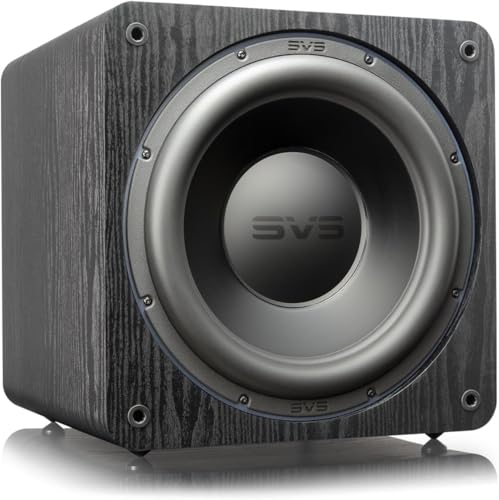
The SB-3000 is the choice when the room is large and the goal is reference-level film playback without the bass ever sounding strained. Its 13-inch driver and substantially larger amplifier move far more air than the 12-inch models, and the sealed cabinet keeps that extra output clean, so big effects hit hard and stop cleanly. Despite the performance step up, the cabinet stays just over 15 inches cubed, which means it can still sit beside a screen wall in a purpose-built room rather than demanding a dedicated alcove.
Specs
- 13-inch high-excursion driver
- Sledge STA-800D2 amplifier, 800 watts RMS and 2,500-plus watts peak
- Sealed cabinet design
- Frequency response 18-270 Hz
- 50 MHz Analog Devices audio DSP
- Smartphone app with volume, DSP functions and custom presets
- Inputs: RCA, 12V trigger
- Cabinet measuring just over 15 inches cubed
Best for: Large dedicated media rooms and reference-level film playback.
Watch out for: The extra output is wasted in a very small room, where it can overwhelm the space unless the level is set carefully during calibration.
KEF KC62

The KC62 takes a completely different route to sealed bass, using two force-cancelling 6.5-inch drivers in a tiny aluminium cabinet that can hide on a shelf or beside a seat. That compact size is a real advantage in a small media room where a conventional cube would block a walkway or clash with the decor, and the force-cancelling layout keeps cabinet vibration low. Five preset room-placement equalisation settings help it adapt to corners, walls and open positions, so you can place it where the room allows and still get balanced bass.
Specs
- Two 6.5-inch force-cancelling drive units with Uni-Core technology
- 1,000 watts RMS of specially designed Class D amplification, in two 500-watt channels
- Sealed, compact aluminium cabinet
- Five preset Room Placement Equalisation DSP settings
- P-Flex driver surround for precise driver movement
- Smart Distortion Control Technology and Music Integrity Engine
- Finishes: Carbon Black and Mineral White
Best for: Small media rooms where the subwoofer must stay discreet and vibration-free.
Watch out for: Two small drivers cannot move as much air as a large single driver, so it suits small rooms and moderate levels rather than large-room reference playback.
REL T/5x
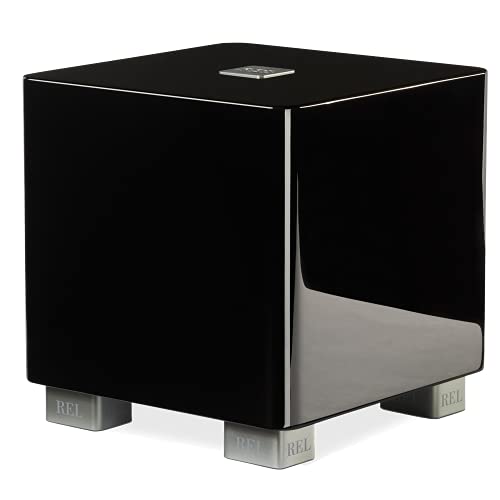
The REL T/5x is a compact sealed subwoofer built around an 8-inch down-firing driver and a Class AB amplifier, and its strength is musical, tightly controlled bass that supports a film soundtrack without ever drawing attention to itself. In a small dedicated room it adds the low foundation that compact main speakers cannot produce, while its small footprint lets it sit beside a media console or behind seating. RCA inputs make it simple to connect to an AV receiver, and the sealed design keeps the bass articulate at the moderate levels a small room needs.
Specs
- 8-inch powered subwoofer with a compact sealed design
- Down-firing driver
- Class AB amplifier
- RCA inputs
- High gloss black finish
- Suited to HiFi stereo systems, home theater and surround sound
Best for: Small media rooms that need tight, musical bass from a very compact sealed cabinet.
Watch out for: The 8-inch driver has clear output limits, so confirm the room is small enough for this class of subwoofer before buying.
Which One Fits Your Situation
A small converted bedroom or study
Pick the SVS SB-1000 Pro or the KEF KC62, because both deliver controlled sealed bass without demanding much floor space. The SB-1000 Pro gives you more outright output for film effects, while the KC62 is the better pick when the subwoofer has to hide on a shelf or beside a seat. Either way, the sealed design will suit the closed, small space.
A mid-size room with a projector and fixed seating
Choose the SVS SB-2000 Pro, since its deeper extension and larger amplifier fill a mid-size room more convincingly than a compact model. The app presets let you store one tuning for films and another for music, which suits a room with a single listening position. Measure the corner or screen-wall space first, as the near-cube cabinet needs a genuine 15-inch footprint.
A large purpose-built cinema room
Go with the SVS SB-3000, because its 13-inch driver and larger amplifier provide the headroom a big room demands at reference levels. The sealed cabinet keeps that output tight, so dialogue stays clear even during the loudest passages. If the room is very large, consider planning for a second matching subwoofer later rather than expecting one unit to pressurise the whole space.
A room where looks and placement matter most
Take the KEF KC62 or the REL T/5x, depending on whether you value the KC62’s tiny aluminium cabinet and placement presets or the REL’s simple, musical sealed character. Both disappear visually in a finished media room and work well beside seating or a console. Keep expectations realistic: these are small-room solutions, not large-room output machines.
Common Mistakes
- Choosing a ported subwoofer by accident, because the listing title does not always state the cabinet type clearly, so confirm the word sealed appears in the product description before buying.
- Buying the largest driver available for a small room, where excessive output overwhelms the space and makes calibration harder rather than better.
- Placing the subwoofer where it looks tidy instead of where it sounds best, then never testing a corner or mid-wall position.
- Skipping calibration after connecting the subwoofer, leaving the crossover, phase and level at factory defaults that rarely suit a real room.
- Forgetting to check the input type on the listing, and discovering too late that the AV receiver output and the subwoofer input do not match.
Frequently Asked Questions
Why is a sealed subwoofer better for a dedicated media room?
A sealed cabinet has no port, so its bass rolls off gradually and stays tight and controlled, which suits a closed, treated room with fixed seating. Effects start and stop cleanly, dialogue stays intelligible, and the subwoofer blends more easily with the main speakers at the crossover point. That control matters more in a dedicated room than the extra raw output a ported design offers.
How many subwoofers does a dedicated media room need?
One good sealed subwoofer is enough for a small or mid-size room, provided the driver and amplifier suit the room volume. Larger rooms often benefit from two matching subwoofers, because a pair smooths out peaks and nulls across the seating area and shares the workload. Start with one well-chosen model, calibrate it properly, and add a second only if the bass is uneven across seats.
What size driver should I choose for film bass?
A 12-inch or 13-inch driver is a sound default for film use, because it moves enough air for deep effects without strain. An 8-inch or compact dual-driver model can work well in a small room, but it will reach its limits sooner on the lowest notes. Match the driver to the room volume first, then check the frequency response and in-room extension figures on the listing.
Can I use a sealed subwoofer for music as well as films?
Yes, and sealed designs are often preferred for music because their tight transient response suits bass guitars, kick drums and orchestral lows. The app-controlled models in this guide let you store separate presets for films and music, so you can switch tunings without adjusting the rear panel. Set the crossover carefully so the subwoofer supports the main speakers instead of overlapping them.
Related guides
More from Amazon
Programs that pair well with the guide above. Offers and eligibility are set by Amazon and may change.
Free shipping on eligible items, Prime Video and more. Eligible new members can start with a free trial.
Start a Prime free trialAudiobooks and podcasts to listen to on the go. Eligible new members can start with a free trial.
Try Audible freeAd-free music streaming. Eligible new subscribers can start with a free trial.
Try Music Unlimited freeA free business account with business pricing and bulk-buying tools for work, shop or home office.
Create a business accountAs an Amazon Associate we earn from qualifying purchases.










Write Your Review
No reviews yet. Be the first to share your experience!