
Key takeaways
- Find the best 15-inch powered subwoofers for music listening, from tight and controlled bass to deep room-filling low end for stereo systems.
What's inside
As an Amazon Associate I earn from qualifying purchases. This post may contain affiliate links at no extra cost to you.
A 15-inch powered subwoofer bought for music is a different decision from one bought for movies. Film bass rewards sheer impact, while music bass has to arrive on time, stop cleanly, and stay out of the way of voices, piano, and acoustic guitar. Pick the wrong cabinet and a double bass turns into a vague rumble, a kick drum loses its snap, and every track starts to sound the same. Pick the right one and the low end simply feels complete, as if the main speakers grew larger overnight.
This guide is for stereo listeners, vinyl collectors, and anyone building a two-channel system who wants bass that serves the recording rather than showing off. It also suits listeners with a large living room where a smaller subwoofer runs out of breath at normal volume. Every model below was chosen from the name and specifications shown on its Amazon listing, with the focus on driver size, amplifier control, crossover flexibility, and cabinet design that matter for music.
Quick Picks
As an Amazon Associate we earn from qualifying purchases.
| Product | Best for | Key spec from title |
|---|---|---|
| Monoprice SW-15 | Large rooms and punchy, full-bodied bass | 15-inch driver, 600 watt RMS amplifier |
| Klipsch SPL-150 | Detailed bass with a fast, lively character | 15-inch driver, 400 watt RMS Class D amplifier |
| Dayton Audio SUB-1500 | A first 15-inch subwoofer on a modest setup | 15-inch driver, 150 watt powered subwoofer |
| Rockville Rock Shaker 15 | Home theater and studio use with flexible inputs | 15-inch driver, 1000 watt peak Class D amplifier |
How to Choose
Match the cabinet tuning to the music you play
A ported cabinet moves more air and reaches deeper, which suits organ music, electronic tracks, and large-scale orchestral recordings that live in the lowest octave. A sealed cabinet tends to sound tighter and stops faster, which flatters jazz, folk, and vocal recordings where timing matters more than extension. Most 15-inch powered subwoofers for music use a ported design, so check how the port is placed. A front-firing port is easier to position near a wall, while a rear port needs breathing room behind the cabinet or the bass can turn thick and uneven.
Look past the headline wattage
Amplifier power figures tell only part of the story, because a well-matched amplifier and driver combination can sound cleaner than a far more powerful one paired with a loose driver. For music, continuous RMS power matters more than peak power, since it reflects what the amplifier can sustain through a long bass passage rather than a single burst. A 150 watt amplifier driving a large, efficient 15-inch driver can fill a medium room comfortably, while a 600 watt or 1000 watt amplifier gives a large room more headroom before distortion creeps in. Read the RMS figure first and treat peak power as a secondary detail.
Demand usable crossover and phase controls
A subwoofer that cannot blend with the main speakers will always sound like a separate box in the corner, no matter how good its driver is. A variable low-pass crossover lets you set the exact point where the subwoofer hands over to the main speakers, which is essential when the mains already reach down to 50 or 60 Hz. A phase control, ideally variable rather than a simple switch, lets you align the arrival of the bass with the main speakers so the two do not cancel each other at the listening seat. These two controls do more for musical accuracy than any extra wattage on the specification sheet.
Measure the room before the subwoofer
A 15-inch subwoofer is a large piece of furniture, and its cabinet can dominate a small room both visually and acoustically. Measure the floor space, the path through doorways, and the distance to the listening seat before ordering, because a cabinet this size cannot be tucked behind a sofa as an afterthought. Large rooms with high ceilings and open floor plans are where a 15-inch driver earns its place, since the extra cone area fills the space without strain. In a compact apartment, the same subwoofer may excite room modes that make bass notes boom on some tracks and vanish on others, so placement and a low crossover setting matter even more.
The 4 Best Options
Monoprice SW-15
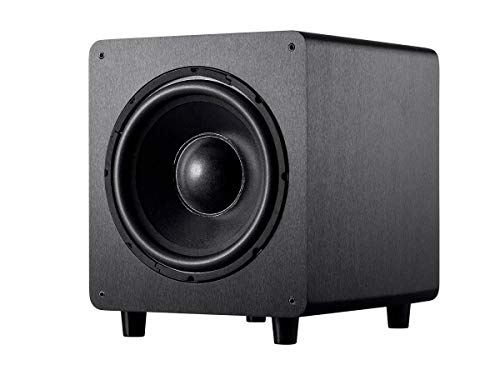
The Monoprice SW-15 is the most balanced starting point in this group for listeners who want a big, confident low end without giving up control. Its 15-inch driver and 600 watt RMS amplifier give it the headroom to reproduce double bass and kick drum with weight, while the variable low-pass filter and variable phase control make it straightforward to blend with bookshelf or floorstanding speakers. The ported cabinet is tuned for depth, yet the crossover range down to 40 Hz lets you keep the upper bass clean and avoid the thick, muddy character that spoils vocal recordings. It is a practical choice for a large living room stereo system.
Specs
- 15-inch driver in a ported cabinet
- 600 watt RMS amplifier, 800 watt peak
- Frequency response 30 to 150 Hz
- Variable low-pass crossover from 40 to 150 Hz
- Variable phase control
- Speaker-level inputs plus line-level inputs
- Dimensions 18.1 by 21 by 22.7 inches
- Weight 66.1 pounds
Best for: Large living rooms where a stereo system needs deep, full-bodied bass with headroom to spare.
Watch out for: The cabinet is heavy and wide, so confirm floor space and measure doorways before delivery day.
Klipsch SPL-150

The Klipsch SPL-150 brings a lively character that suits rock, pop, and jazz recordings where bass lines need to be heard clearly rather than merely felt. Its 15-inch spun-copper Cerametallic woofer is light and rigid, which helps the driver start and stop quickly, and the front-firing slot port keeps port noise low while allowing placement close to a wall. The all-digital Class D amplifier delivers 400 watts RMS with 800 watts of peak power, and the variable low-pass filter runs from 40 to 120 Hz with an LFE bypass position for receiver-managed setups. A wireless WA-2 port is built in for listeners who want to avoid a long cable run.
Specs
- 15-inch spun-copper Cerametallic front-firing woofer
- Class D amplifier, 400 watt RMS and 800 watt peak
- Frequency response 18 to 125 Hz
- Maximum acoustic output 122 dB
- Front-firing slot port with internal flare geometry
- L/R line-level and LFE RCA inputs, plus WA-2 wireless port
- Variable low-pass filter from 40 to 120 Hz with LFE setting
- Switchable phase control from 0 to 180 degrees
- Weight 75.4 pounds
Best for: Listeners who want articulate, energetic bass for rock, jazz, and pop in a medium to large room.
Watch out for: This model has been superseded in the Klipsch range, so check the listing carefully and confirm the seller and condition before ordering.
Dayton Audio SUB-1500
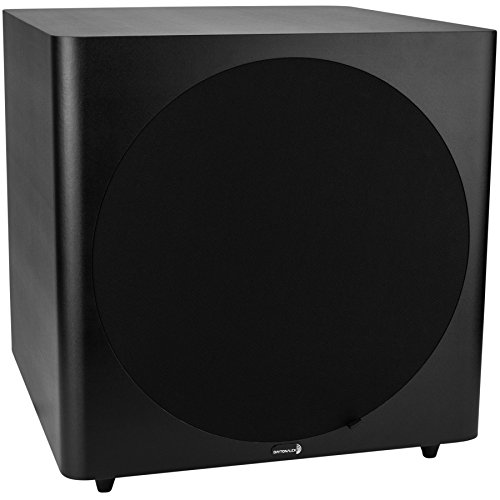
The Dayton Audio SUB-1500 is the simplest way into a 15-inch powered subwoofer, and it suits listeners who want to hear what a large driver adds before spending more. Its 150 watt amplifier is modest next to the others here, yet the big cone moves plenty of air at normal listening levels, giving acoustic bass and kick drum a sense of scale. The frequency response reaches down to 23 Hz, which covers the fundamentals of most instruments, and the ported cabinet keeps the low end open rather than boxed in. It is best paired with efficient main speakers in a medium room, where its gentle character and straightforward controls shine.
Specs
- 15-inch long-throw powered subwoofer
- 150 watt built-in amplifier
- Frequency response 23 to 140 Hz
- Ported cabinet design
- Variable crossover and gain controls on the rear panel
- Line-level RCA inputs
- Black ash vinyl finish
Best for: First-time buyers who want an affordable 15-inch subwoofer for a medium room stereo setup.
Watch out for: Amazon itself no longer lists this as a directly stocked item, so availability depends on third-party sellers and the listing should be checked before ordering.
Rockville Rock Shaker 15

The Rockville Rock Shaker 15 is an option for listeners whose system does double duty between music and home theater, or for a studio where the subwoofer must connect to whatever is at hand. Its Class D amplifier is rated at 500 watts RMS with 1000 watts of peak power, and the 15-inch driver sits in an MDF enclosure built to limit cabinet vibration. Both RCA and speaker-level inputs are included, so it can join a stereo receiver, an older amplifier without a subwoofer output, or a studio setup without an adapter. Phase and crossover controls on the rear panel allow the bass to be shaped to the room.
Specs
- 15-inch powered subwoofer driver
- Class D amplifier, 500 watt RMS and 1000 watt peak
- MDF enclosure
- RCA inputs and speaker-level inputs
- Phase control and crossover control
- Front-mounted driver with protective grille
- Designed for home theater and studio applications
Best for: Mixed music and movie systems, and setups that need speaker-level inputs because the amplifier has no dedicated subwoofer output.
Watch out for: The listing gives limited detail on the low-end extension, so set expectations from the driver size and amplifier rather than from a published frequency range.
Which One Fits Your Situation
You listen in a large open living room
Choose the Monoprice SW-15. Its 600 watt RMS amplifier and 15-inch driver have the headroom to fill a big space without strain, and the variable crossover and phase controls make it easier to blend with floorstanding speakers. Place it along the front wall near the main speakers, start the crossover around 60 to 80 Hz, and adjust by ear with a familiar bass-heavy track.
You want bass lines to stay clear and punchy
Choose the Klipsch SPL-150. The rigid Cerametallic woofer and front slot port keep bass notes distinct, which matters for jazz walking bass, funk, and rock where the bass guitar carries the groove. Its lively character pairs well with efficient speakers, and the front port gives more freedom to place it near a wall.
You are adding a first subwoofer to a modest stereo
Choose the Dayton Audio SUB-1500. It delivers the scale of a 15-inch driver at the lowest commitment in this group, and its straightforward controls make setup approachable. Keep the crossover low, match the volume to the main speakers rather than turning it up for effect, and give the cabinet a few days of listening before judging the blend.
Your amplifier has no subwoofer output
Choose the Rockville Rock Shaker 15. Its speaker-level inputs connect directly to the same terminals as the main speakers, which solves the most common connection problem with older stereo amplifiers. The phase and crossover controls then let you tune the blend, and the 500 watt RMS amplifier has enough muscle for a medium to large room.
Common Mistakes
- Setting the subwoofer volume by feel during a loud film scene, then finding music sounds bloated at normal levels.
- Choosing the crossover by guesswork instead of matching it to where the main speakers naturally roll off.
- Placing the subwoofer in the only free corner without trying the front wall or the midpoint of a side wall first.
- Buying a 15-inch model for a small bedroom, where room modes make some bass notes boom and others disappear.
- Leaving the phase control at its default setting, which can cancel bass at the listening seat even when the subwoofer itself is working well.
Frequently Asked Questions
Is a 15-inch subwoofer too big for music listening?
Not when the room is large enough and the crossover is set correctly. A 15-inch driver moves more air with less effort, which can sound relaxed rather than loud. The risk is a small room, where the extra output excites room modes. In that case a smaller subwoofer, or careful placement and a low crossover, will sound cleaner.
Should I choose a ported or sealed subwoofer for music?
Ported cabinets reach deeper and suit organ, electronic, and orchestral music, while sealed cabinets tend to sound tighter on jazz and acoustic recordings. Most 15-inch powered models are ported, so the practical question is port placement. A front-firing port is easier to position near a wall, while a rear port needs space behind the cabinet.
What crossover setting should I start with?
Start around 60 to 80 Hz for floorstanding speakers and around 80 to 100 Hz for bookshelf speakers, then adjust by ear with familiar music. The goal is a seamless handoff where you cannot tell where the main speakers stop and the subwoofer begins. If male voices sound thick or chesty, the crossover is set too high.
Do I need a subwoofer with app control or DSP for music?
No. App control and DSP are convenient, but a variable crossover, phase control, and gain knob cover the essentials for most stereo systems. A receiver with room correction can handle the fine tuning instead. What matters most is a driver and amplifier that stay clean at your normal listening level.
Related guides
More from Amazon
Programs that pair well with the guide above. Offers and eligibility are set by Amazon and may change.
Free shipping on eligible items, Prime Video and more. Eligible new members can start with a free trial.
Start a Prime free trialAudiobooks and podcasts to listen to on the go. Eligible new members can start with a free trial.
Try Audible freeAd-free music streaming. Eligible new subscribers can start with a free trial.
Try Music Unlimited freeA free business account with business pricing and bulk-buying tools for work, shop or home office.
Create a business accountAs an Amazon Associate we earn from qualifying purchases.










Write Your Review
No reviews yet. Be the first to share your experience!