
Key takeaways
- Two Swiss automatics anchor the under-10k tier: a compact Tudor diver and a ceramic-bezel Longines diver, compared on movement, size and daily wear.
What's inside
As an Amazon Associate I earn from qualifying purchases. This post may contain affiliate links at no extra cost to you.
A first serious Swiss watch is a decision about what you will live with every day, not a hunt for the most famous name on a dial. In this bracket, the real choice sits between a compact in-house movement with chronometer certification and a larger, tougher diver built around a ceramic bezel, and the wrong pick is usually the one bought for the badge while the case size, the bracelet and the service terms were ignored.
This guide is for first-time luxury buyers, for divers and swimmers who want a watch that can actually get wet, and for gift buyers who want one watch that covers desk, travel and weekend wear. Every pick below was chosen from the model name and the specification table on its Amazon listing, so the case size, movement, crystal and water rating you read here are the listing’s own figures rather than a retailer’s summary.
Quick Picks
As an Amazon Associate we earn from qualifying purchases
| Product | Best for | Key spec from title |
|---|---|---|
| Tudor Black Bay Fifty-Eight Blue Dial M79030B-0001 | A compact vintage-style diver for daily wear | 39 mm steel case, MT5402 automatic chronometer |
| Longines HydroConquest Ceramic 41 mm L3.781.4.76.6 | A larger ceramic-bezel diver for regular water use | 41 mm steel case, 300-metre water resistance |
How to Choose
Start with the movement, then judge the finishing
The movement decides how the watch behaves when it leaves your wrist for a few days, while finishing decides how it looks up close over years of wear. The Tudor runs its in-house MT5402 automatic, a chronometer-grade calibre with a reserve of around 70 hours, so it can sit untouched over a long weekend and still show the right time on Monday morning. The Longines runs a Swiss automatic movement listed without a stated reserve, which means you should expect to reset it after a couple of days off the wrist. Neither movement needs a battery, and both wind from wrist motion, so the practical difference is how long each one keeps running once it is off your arm.
Match the case to your wrist, not to the catalogue photo
Case diameter is the number buyers quote, but thickness and lug width decide whether a watch slides under a cuff or catches on a sleeve. The Tudor measures 39 mm across and 11.9 mm thick on a 20 mm bracelet, which is why it suits slimmer wrists and tailored cuffs better than most modern divers. The Longines measures 41 mm across, a step up that reads noticeably larger on the wrist and gives the dial more presence at the cost of cuff clearance. If you cannot try both on, measure a watch you already wear comfortably and compare its diameter and thickness against these two figures before ordering.
Read the bezel, crystal and water rating as one package
A diver is judged by the parts that meet water, knocks and sunlight, and those parts should be read together rather than one at a time. The Longines pairs a ceramic unidirectional rotating bezel with a scratch-resistant sapphire crystal and a 300-metre rating, a combination built for regular swimming and diving. The Tudor pairs an aluminium-ring unidirectional bezel with a domed sapphire crystal and a 200-metre rating, which covers swimming and recreational diving while keeping the vintage look that defines the model. A higher rating alone does not make a watch better; it matters only if your routine actually includes the water use it covers.
Check the bracelet, the clasp and the after-sales terms
The bracelet is the part you touch every time you put the watch on, so its clasp and adjustment range matter as much as the dial. Both picks here close with a fold-over clasp, the Tudor with a push-button release and the Longines with a safety release, and both use steel bracelets that suit daily wear better than a strap in wet conditions. Before buying, confirm what the seller includes in the box, whether the warranty card is stamped, and how the maker’s service network handles a watch bought through an online marketplace rather than a boutique, because those terms decide how easy the first service will be.
The 2 Best Options
Tudor Black Bay Fifty-Eight Blue Dial M79030B-0001

The Black Bay Fifty-Eight is the pick for buyers who want a vintage-shaped diver that stays compact on the wrist. Its 39 mm steel case and domed sapphire crystal give it the proportions of a mid-century dive watch, while the blue dial, luminous silver-tone hands and dot markers keep it legible at a glance. Inside, the MT5402 automatic movement carries chronometer certification and a reserve of around 70 hours, so the watch keeps running through a long break from the wrist. It suits a first luxury purchase, a smaller wrist, and anyone who wants one steel diver for office, travel and weekend wear without a date window cluttering the dial.
Specs
- Case: 39 mm stainless steel, 11.9 mm thick, round shape, solid case back
- Dial: Blue, domed, with luminous silver-tone hands and dot hour markers
- Crystal: Scratch-resistant sapphire, domed
- Movement: Tudor Calibre MT5402 automatic, 27 jewels, beating at 28,800 vibrations per hour, power reserve around 70 hours
- Bezel: Unidirectional rotating, stainless steel with a blue aluminium ring
- Crown: Screw down
- Water resistance: 200 metres / 660 feet
- Bracelet: Stainless steel, 20 mm wide, fold-over clasp with push-button release
- Functions: Hour, minute, second, chronometer
Best for: A compact vintage-style diver as a first luxury watch or a daily wearer on a slimmer wrist.
Watch out for: There is no date window, so buyers who rely on a date display should look elsewhere; also confirm the exact reference, since the same model is sold on a strap under a different reference number.
Longines HydroConquest Ceramic 41 mm L3.781.4.76.6
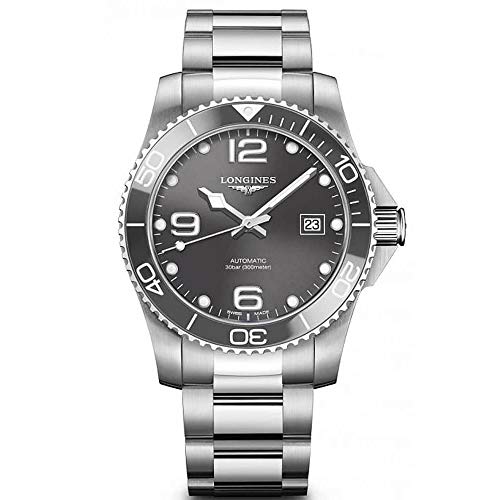
The HydroConquest is the pick for buyers who want the tougher end of this bracket, with a ceramic bezel and the deeper water rating of the pair. Its sunray grey dial sits under a scratch-resistant sapphire crystal, and the silver-tone steel case and bracelet give it a clean, modern tool-watch look that works at the office as well as at the pool. The automatic movement winds from wrist motion with no battery to replace, and the unidirectional rotating bezel times swims and dives. It suits buyers who swim regularly, who prefer a larger 41 mm case, or who want a ceramic bezel that resists daily scratches.
Specs
- Case: 41 mm silver-tone stainless steel
- Dial: Sunray grey
- Crystal: Scratch-resistant sapphire
- Movement: Automatic
- Bezel: Unidirectional rotating, ceramic
- Water resistance: 300 metres / 1000 feet
- Bracelet: Silver-tone stainless steel band, fold-over clasp with safety release
- Material: Stainless steel, alloy steel
- Model number: L3.781.4.76.6
Best for: A larger ceramic-bezel diver for regular swimming and for buyers who want the deeper water rating.
Watch out for: The listing gives no stated power reserve, so expect to reset the time after a few days off the wrist; also check the dial colour carefully, since this model is sold in several dial colours under different model numbers.
Which One Fits Your Situation
Your wrist is slim or your cuffs are tailored
Choose the Tudor. Its 39 mm case and 11.9 mm thickness slide under a shirt cuff where a taller diver would catch, and the 20 mm bracelet keeps the whole watch proportional on a slimmer wrist. The blue dial still reads as a proper diver, so nothing about the watch looks like a compromise.
You swim often and want the toughest bezel
Choose the Longines. Its ceramic bezel resists scratches better than an aluminium insert, its 300-metre rating is the deeper of the two, and the 41 mm case gives the dial more presence in and out of the water. It is the more tool-like of the pair. The steel bracelet also handles repeated wetting better than a leather strap, so the watch is ready for the water without a strap change.
You want a clean dial with no date window
Choose the Tudor. The date-free dial keeps the face symmetrical and uncluttered, and the snowflake hour hand gives it a distinctive silhouette. Just be sure a date display is not something you will miss within the first month of wearing it. The trade-off is real, so check your habits first: if you glance at your wrist for the date more than a couple of times a day, a date display belongs on your shortlist instead.
You want one watch for desk, travel and weekends
Either pick works, so let size decide. Take the Tudor if your working week involves tailored clothing and a smaller wrist, and take the Longines if your routine leans outdoors and you prefer a larger, more present watch on the wrist. Both movements wind from wrist motion and both bracelets suit wet conditions, so the deciding factor is genuinely size and style rather than any difference in durability.
Common Mistakes
- Buying for the brand name alone without comparing the movement, the case size and the water rating on the listing.
- Ordering a 41 mm case without checking thickness and lug width against a watch you already wear comfortably.
- Assuming every marketplace seller includes a stamped warranty card and the maker’s full after-sales terms.
- Mixing up references: the same model line is sold on bracelet and strap under different reference numbers, and the dial colour changes the model number too.
- Treating a high water rating as a guarantee: gaskets age, and the rating assumes the crown is screwed down and the seals are intact.
Frequently Asked Questions
What counts as a watch under 10k?
This guide covers the bracket below the flagship luxury tier, where steel Swiss divers from makers such as Tudor and Longines sit. It is the segment for a first serious automatic watch: in-house or Swiss automatic movements, sapphire crystals and proper water ratings, without the precious-metal cases and complications of the tier above it.
Is an automatic movement worth it in this bracket?
Yes, if you wear the watch regularly and value a movement that winds from wrist motion with no battery to replace. An automatic suits a daily wearer, while a watch worn only occasionally will need resetting after a break. The Tudor’s reserve of around 70 hours makes that break more forgiving than the Longines, whose listing states no reserve figure.
How often do these watches need servicing?
Follow the maker’s guidance rather than a fixed calendar, and keep the warranty card and purchase receipt from the day you buy. A diver that is used in water should have its seals checked when it goes in for service, and any watch that starts losing or gaining time noticeably deserves a check sooner than the scheduled interval.
How do I check authenticity when buying online?
Match the reference number on the listing against the maker’s own catalogue, and confirm the dial colour, case size and bracelet type line up with that reference. Buy from a seller who states what is included in the box, check the warranty card terms before ordering, and inspect the watch, its papers and its packaging as soon as it arrives.
Related guides
More from Amazon
Programs that pair well with the guide above. Offers and eligibility are set by Amazon and may change.
Free shipping on eligible items, Prime Video and more. Eligible new members can start with a free trial.
Start a Prime free trialAudiobooks and podcasts to listen to on the go. Eligible new members can start with a free trial.
Try Audible freeAd-free music streaming. Eligible new subscribers can start with a free trial.
Try Music Unlimited freeA free business account with business pricing and bulk-buying tools for work, shop or home office.
Create a business accountAs an Amazon Associate we earn from qualifying purchases.










Write Your Review
No reviews yet. Be the first to share your experience!