
Key takeaways
- Find the best sunscreen for combination skin, with balanced formulas that hydrate dry areas without adding shine to the oily T-zone for daily use.
What's inside
As an Amazon Associate I earn from qualifying purchases. This post may contain affiliate links at no extra cost to you.
Combination skin is two skin types in one face. The T-zone, forehead, nose, and chin, tends to be oily and shiny by midday. The cheeks tend to be normal or dry, and they can feel tight after cleansing. A sunscreen for combination skin has to balance both. It needs to hydrate the dry areas without adding shine to the oily ones, and it needs to stay comfortable for a full day.
This guide covers what makes a sunscreen work for combination skin, from texture and finish to the ingredients that help both zones. It then compares four sunscreens that suit combination skin, from a matte-finish lotion to a sheer fluid with high SPF.
How to Choose a Sunscreen for Combination Skin
Balance is the goal
A sunscreen for combination skin should not be too rich or too mattifying. A rich cream can make the T-zone greasy by midday. A strongly mattifying formula can leave the cheeks feeling tight and dry. The middle ground is a lightweight lotion or fluid that hydrates without weight and dries down to a natural finish, neither shiny nor chalky.
Oil-free and matte, but not drying
Oil-free formulas suit the T-zone, and a matte finish helps control shine. The key is a matte finish that does not dry out the cheeks. Look for a formula that describes itself as oil-free with a matte finish, and that also includes hydrating ingredients such as hyaluronic acid or ceramides. That combination is the clearest sign that a sunscreen is made for combination skin.
Lightweight texture
A lightweight lotion or fluid spreads easily and does not sit heavily on the skin. A fluid texture is especially good for combination skin, because it covers the face evenly without pooling in oily areas. A gel texture can also work, as long as it does not feel tight on the cheeks. Avoid thick creams, which are made for dry skin and can overwhelm the T-zone.
Non-comedogenic
Combination skin is often prone to breakouts in the T-zone, where oil and sweat collect. A non-comedogenic formula is made not to block pores, which reduces the chance of breakouts. Oil-free and non-comedogenic are the two label claims that matter most for the T-zone.
Broad spectrum and SPF
Combination skin needs the same UV protection as any other skin type. Broad spectrum protection covers UVA rays, which contribute to skin aging, and UVB rays, which cause sunburn. SPF 30 is enough for most everyday use, and SPF 40 to 60 suits long days outdoors. A higher SPF does not mean the sunscreen lasts longer, so reapplication still matters.
Top Picks
CeraVe Ultra-Light Moisturizing Lotion with SPF 30, 1.7 Ounce

The CeraVe Ultra-Light Moisturizing Lotion with SPF 30 is made for normal to oily skin, which is exactly the profile of combination skin. It is an oil-free daily face moisturiser with broad spectrum SPF 30, made with hyaluronic acid and ceramides, and it has a matte finish. The formula moisturises and helps restore the protective skin barrier without adding shine to the T-zone. The 1.7 ounce tube is a practical size for a bathroom counter or a travel bag.
- Broad spectrum SPF 30
- Made for normal to oily skin
- Oil-free with a matte finish
- Hyaluronic acid and ceramides
- Moisturises and helps restore the protective skin barrier
- 1.7 ounce tube
Best for: Combination skin that needs a light, matte-finish daily moisturiser with SPF.
La Roche-Posay Anthelios Light Fluid Facial Sunscreen SPF 60, 1.7 Fl. Oz.

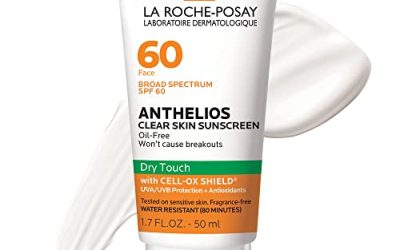
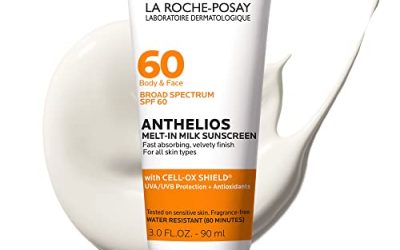
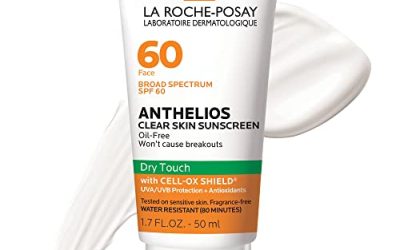
The La Roche-Posay Anthelios Light Fluid Facial Sunscreen SPF 60 is a fluid sunscreen with a lightweight texture that suits combination skin. It gives broad spectrum SPF 60 protection with Cell-Ox Shield technology, which combines UVA and UVB filters with antioxidants. The formula is oil-free and oxybenzone-free, fragrance-free, and water resistant for 80 minutes. The listing notes that it is tested on sensitive skin, and the fluid leaves a matte finish with no white cast. The 1.7 fl oz size is a travel size that fits a bag.
- Broad spectrum SPF 60
- Lightweight fluid texture
- Oil-free and oxybenzone-free
- Fragrance-free and water resistant for 80 minutes
- Matte finish with no white cast, per the listing
- Tested on sensitive skin, per the listing
- 1.7 fl oz travel size
Best for: Combination skin that wants high SPF in a light fluid with a matte finish.
EltaMD UV Daily SPF 40 Face Sunscreen Moisturizer, 1.7 oz Pump

The EltaMD UV Daily SPF 40 is a face sunscreen moisturiser made for normal, combination, and post-procedure skin. It is a broad spectrum SPF 40 formula with zinc oxide and hyaluronic acid, described as sheer and lightweight, with a transparent zinc oxide finish. The formula moisturises and hydrates while it protects, which suits combination skin that needs moisture on the cheeks without weight on the T-zone. The 1.7 oz pump bottle is easy to use every morning.
- Broad spectrum SPF 40
- Made for normal, combination, and post-procedure skin, per the listing
- Zinc oxide and hyaluronic acid
- Sheer and lightweight with a transparent zinc oxide finish
- Moisturising facial sunscreen
- 1.7 oz pump bottle
Best for: Combination skin that needs a moisturising sunscreen with a sheer, lightweight feel.
CeraVe Hydrating Sheer Sunscreen with SPF 30, 3 Ounces
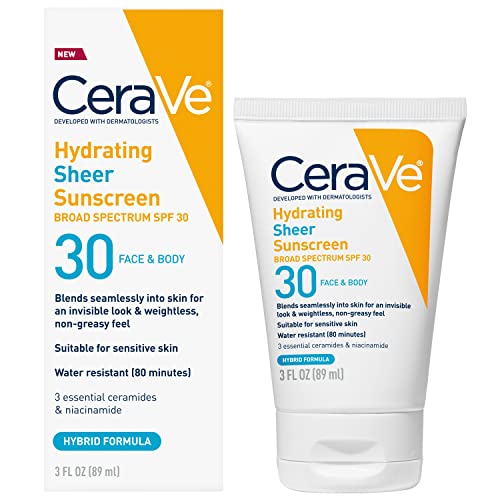
The CeraVe Hydrating Sheer Sunscreen with SPF 30 is a face and body sunscreen that suits combination skin. It is a mineral and chemical sunscreen with zinc oxide, hyaluronic acid, and ceramides, and it is paraben-free and fragrance-free. The sheer texture spreads easily and does not leave a heavy film, which helps the T-zone stay comfortable through the day. The 3 ounce tube is a good size for face and body use.
- Broad spectrum SPF 30
- Mineral and chemical sunscreen with zinc oxide
- Hyaluronic acid and ceramides
- Paraben-free and fragrance-free
- Sheer texture for face and body
- 3 ounce tube
Best for: Combination skin that wants a sheer, hydrating sunscreen for face and body.
Comparison
| Product | Key Feature | Best For |
|---|---|---|
| CeraVe Ultra-Light Moisturizing Lotion SPF 30 | Oil-free, matte finish, made for normal to oily skin | A light daily moisturiser with SPF |
| La Roche-Posay Anthelios Light Fluid SPF 60 | Fluid texture, SPF 60, matte finish, no white cast | High SPF in a light fluid |
| EltaMD UV Daily SPF 40 | Made for combination skin, zinc oxide, hyaluronic acid | A moisturising sunscreen with a sheer feel |
| CeraVe Hydrating Sheer Sunscreen SPF 30 | Sheer texture, zinc oxide, ceramides, face and body | A sheer hydrating sunscreen for face and body |
Buying Guide
How to apply for combination skin
Apply sunscreen evenly across the whole face, rather than using more on the oily areas and less on the dry ones. A thin, even layer protects both zones. If the T-zone gets shiny by midday, blot with a tissue or blotting paper rather than adding more sunscreen. A second thin layer of a light formula is better than one thick layer.
When to apply and reapply
Apply sunscreen 15 minutes before going outside, after moisturiser and before makeup. Reapply at least every two hours outdoors, and sooner after swimming or heavy sweating. For combination skin, reapplication over makeup is the hardest part. A sunscreen stick or a light fluid dabbed on the T-zone can help without disturbing the rest of the face.
Sunscreen and makeup for combination skin
A sunscreen with a matte finish works well under makeup for combination skin, because it helps control shine in the T-zone without drying the cheeks. Let the sunscreen settle for a few minutes before applying foundation. A primer on top of the sunscreen can help makeup last longer, especially on the nose and forehead.
Seasonal changes
Combination skin changes with the seasons. In summer, the T-zone is oilier and a lighter formula works better. In winter, the cheeks are drier and a more hydrating formula feels better. It is normal to use a lighter sunscreen in summer and a richer one in winter. The picks in this guide cover both ends, so switch with the season rather than using one formula all year.
Spotting the wrong formula
If the T-zone is greasy by midday and the cheeks feel tight, the formula is too rich. If the cheeks flake and the T-zone still shines, the formula is too mattifying. The right sunscreen for combination skin leaves the whole face feeling comfortable, with no tightness and no heavy shine, several hours after application.
Frequently Asked Questions
What is the best sunscreen for combination skin?
A lightweight, oil-free formula with a matte finish and hydrating ingredients is the best starting point. The CeraVe Ultra-Light Moisturizing Lotion SPF 30 is made for normal to oily skin, and the EltaMD UV Daily SPF 40 is made for combination skin, so either is a strong choice.
Should I use a different sunscreen on the T-zone and cheeks?
Most people do not need two sunscreens. A balanced formula that suits both zones is simpler and easier to use every day. If the T-zone is very oily, a mattifying primer on top of the sunscreen can help, rather than a second sunscreen.
Will sunscreen make my T-zone oilier?
A heavy or greasy sunscreen can. An oil-free formula with a matte finish is made to avoid that. If the T-zone still gets shiny, blot during the day rather than skipping sunscreen.
What SPF should I use for combination skin?
SPF 30 is enough for most everyday use, and SPF 40 to 60 suits long days outdoors. The SPF number does not change how a formula feels, so choose the texture first and the SPF second, as long as it is at least SPF 30.
Conclusion
The best sunscreen for combination skin balances hydration and shine control. The CeraVe Ultra-Light Moisturizing Lotion SPF 30 gives a light, matte-finish daily moisturiser with SPF for normal to oily skin. The La Roche-Posay Anthelios Light Fluid SPF 60 gives high protection in a fluid with a matte finish and no white cast. The EltaMD UV Daily SPF 40 is made for combination skin, with zinc oxide and hyaluronic acid in a sheer, lightweight formula. The CeraVe Hydrating Sheer Sunscreen SPF 30 gives a sheer, hydrating option for face and body. Pick the texture that feels balanced across the whole face, apply generously, reapply through the day, and sun protection becomes a simple part of the routine.
Disclosure: As an Amazon Associate, we earn from qualifying purchases.
Related guides
More from Amazon
Programs that pair well with the guide above. Offers and eligibility are set by Amazon and may change.
Free shipping on eligible items, Prime Video and more. Eligible new members can start with a free trial.
Start a Prime free trialAudiobooks and podcasts to listen to on the go. Eligible new members can start with a free trial.
Try Audible freeAd-free music streaming. Eligible new subscribers can start with a free trial.
Try Music Unlimited freeA free business account with business pricing and bulk-buying tools for work, shop or home office.
Create a business accountAs an Amazon Associate we earn from qualifying purchases.
Write Your Review
No reviews yet. Be the first to share your experience!