
Key takeaways
- Find the best sunscreen for acne prone skin, with oil-free, non-comedogenic formulas that protect without clogging pores or triggering breakouts.
What's inside
As an Amazon Associate I earn from qualifying purchases. This post may contain affiliate links at no extra cost to you.
Acne-prone skin and sunscreen have a difficult relationship. Sunscreen is essential, because sun exposure can make acne marks darker and slower to fade. But the wrong sunscreen can clog pores and trigger new breakouts, which makes the skin worse. The result is that many people with acne-prone skin skip sunscreen altogether, which is the worst choice of all.
The right sunscreen for acne-prone skin is light, oil-free, and non-comedogenic. It protects against UV rays without adding oil to the skin or blocking pores. This guide covers what to look for in a sunscreen for acne-prone skin and compares four formulas made for skin that breaks out easily.
How to Choose a Sunscreen for Acne Prone Skin
Non-comedogenic is the first filter
A non-comedogenic formula is made not to block pores. For acne-prone skin, this is the single most important label claim. A sunscreen that is not non-comedogenic can trap oil and dead skin in the pores, which leads to breakouts. Check the label for the words non-comedogenic before anything else.
Oil-free and lightweight
Oil-free formulas add no extra oil to skin that already produces too much. A lightweight lotion, fluid, or gel absorbs fast and does not leave a heavy film. A thick cream can feel suffocating on acne-prone skin and is more likely to cause breakouts. Look for words on the label such as lightweight, oil-free, and sheer.
Matte finish helps
A matte finish controls shine in the T-zone, where acne-prone skin tends to be oiliest. A sunscreen with a matte finish also works better under makeup, because it does not add extra shine. A mineral mattifying formula can also help absorb excess oil through the day, although it should not dry out the skin.
Ingredients that calm the skin
Some sunscreens include ingredients that help acne-prone skin. Niacinamide is a common one, and it is found in several of the formulas in this guide. Zinc oxide is also helpful, because it is a mineral UV filter that sits on the skin and is less likely to irritate it. A formula with niacinamide and zinc oxide is a good sign for acne-prone skin.
Fragrance-free
Fragrance is a common irritant, and irritated skin is more likely to break out. A fragrance-free formula reduces the chance of irritation. Oxybenzone-free formulas are also worth seeking out, because oxybenzone can irritate sensitive, acne-prone skin.
Top Picks
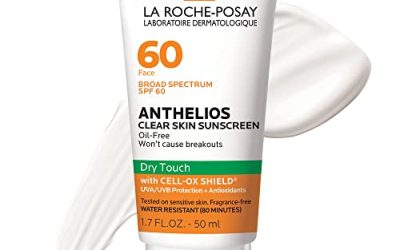
La Roche-Posay Anthelios Clear Skin Sunscreen Dry Touch SPF 60
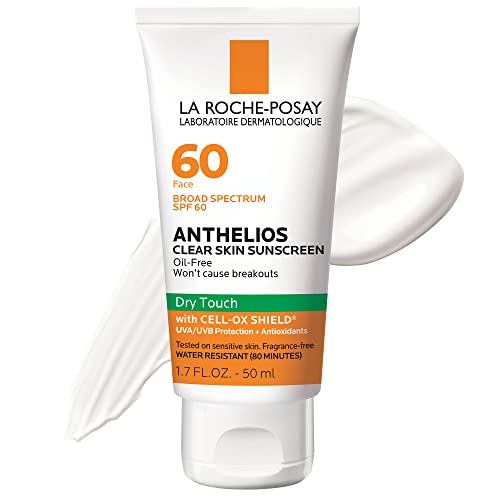
The La Roche-Posay Anthelios Clear Skin Sunscreen Dry Touch SPF 60 is an oil-free face sunscreen made for skin that is prone to breakouts. It gives broad spectrum SPF 60 protection with antioxidants, and it is oil absorbing with a dry touch, non-greasy finish. The formula is oxybenzone-free and made for the face. The dry touch finish suits acne-prone skin that gets shiny by midday, and the high SPF covers long days outdoors as well as daily wear.
- Broad spectrum SPF 60 for the face
- Oil-free and oil absorbing
- Dry touch, non-greasy finish
- Broad spectrum SPF with antioxidants
- Oxybenzone-free
- Made for skin prone to breakouts, per the listing
Best for: Acne-prone skin that needs high SPF in an oil-absorbing, dry touch formula.
Supergoop! Mineral Mattescreen SPF 40, 45 mL

The Supergoop! Mineral Mattescreen SPF 40 is a mineral sunscreen made to control shine. It is an oil-free, broad spectrum mineral sunscreen in a 45 mL tube, and it smooths the appearance of the skin, minimises pores, and controls shine. It is water and sweat resistant. The mattifying finish suits acne-prone skin that gets oily through the day, and the mineral formula is gentle on skin that is easily irritated. The neutral tint helps the formula blend without a white cast.
- Broad spectrum SPF 40
- Mineral, oil-free sunscreen
- Smooths the appearance of the skin and minimises pores
- Controls shine
- Water and sweat resistant
- 45 mL tube
Best for: Acne-prone skin that gets shiny through the day and needs a mattifying mineral sunscreen.
Hero Cosmetics Force Shield Superlight Sunscreen SPF 30, 1.69 Fl Oz

The Hero Cosmetics Force Shield Superlight Sunscreen SPF 30 is made specifically for acne-prone skin. It is a broad spectrum SPF 30 face sunscreen with 17.53 percent non-nano zinc oxide, in a gel-cream texture that the brand says will not clog pores. The formula is fragrance free and includes niacinamide, squalane, and antioxidants. A green tint in the formula blurs redness, which suits skin with acne marks. The 1.69 fl oz tube is a practical size for daily use.
- Broad spectrum SPF 30 for face and acne-prone skin
- 17.53 percent non-nano zinc oxide
- Gel-cream texture that will not clog pores, per the brand
- Fragrance free
- Niacinamide, squalane, and antioxidants
- Green tint blurs redness
- 1.69 fl oz tube
Best for: Acne-prone skin that needs a lightweight sunscreen made to calm redness and protect without clogging pores.
Neutrogena Clear Face Sunscreen Lotion, Broad Spectrum SPF 50, 3 fl. oz
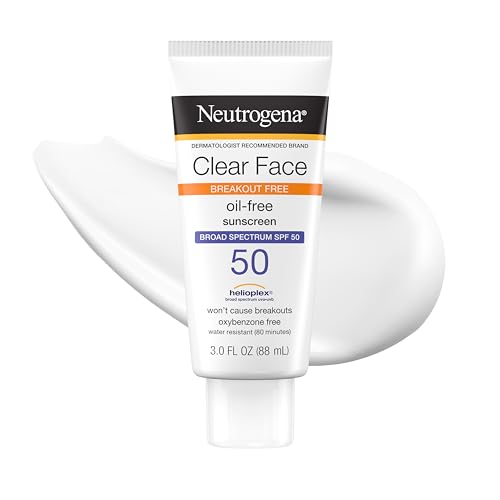
The Neutrogena Clear Face Sunscreen Lotion is a broad spectrum SPF 50 face sunscreen made for oily and acne-prone skin. It is a lightweight, oil-free, fragrance-free, and oxybenzone-free lotion with Helioplex technology, and it leaves a water-light, matte finish that lets the skin breathe. The listing describes it as dermatologist tested and made not to cause breakouts. It is water resistant for up to 80 minutes, which covers outdoor activity as well as daily wear. The 3 fl oz travel size fits a bag or a desk drawer.
- Broad spectrum SPF 50 for the face
- Made for oily and acne-prone skin
- Lightweight, oil-free, fragrance-free, and oxybenzone-free
- Water-light, matte finish
- Helioplex technology for UVA and UVB protection
- Water resistant for up to 80 minutes
- Dermatologist tested, per the listing
- 3 fl oz travel size
Best for: Oily, acne-prone skin that needs a light, matte face sunscreen that will not cause breakouts.
Comparison
| Product | Key Feature | Best For |
|---|---|---|
| La Roche-Posay Anthelios Clear Skin SPF 60 | Oil-absorbing, dry touch, SPF 60 | High SPF in an oil-absorbing formula |
| Supergoop! Mineral Mattescreen SPF 40 | Mineral, oil-free, controls shine, minimises pores | Shiny, acne-prone skin |
| Hero Cosmetics Force Shield SPF 30 | 17.53 percent zinc oxide, green tint, will not clog pores | Acne-prone skin with redness |
| Neutrogena Clear Face SPF 50 | Oil-free, matte finish, water resistant 80 minutes | Oily, acne-prone skin, daily wear |
Buying Guide
How much to use
Most people use far too little sunscreen. A good rule is two finger-lengths of lotion for the face and neck. A thin layer gives far less protection than the SPF number on the tube suggests. Apply generously and spread evenly, and pay attention to the hairline, the ears, and the back of the neck.
When to apply and reapply
Apply sunscreen 15 minutes before going outside, after moisturiser and before makeup. Reapply at least every two hours outdoors, and sooner after swimming or heavy sweating. For acne-prone skin, reapplication over makeup is the hardest part. A sunscreen stick or a light fluid dabbed on the T-zone can help without disturbing the rest of the face.
Sunscreen and acne treatment
Acne treatments can make the skin more sensitive to the sun, so sunscreen matters even more when they are in the routine. A gentle sunscreen that does not sting or pill is worth seeking out. If a sunscreen causes stinging on skin that is being treated, a mineral formula with few added ingredients is a sensible next step. Do not skip sunscreen because of an acne treatment. The treatment works better when the skin is protected.
Sunscreen and makeup for acne-prone skin
A sunscreen with a matte finish works well under makeup for acne-prone skin, because it helps control shine without adding oil. Let the sunscreen settle for a few minutes before applying foundation. A mattifying formula, such as the Supergoop! Mineral Mattescreen, can also work as a primer, which helps makeup stay in place on oily skin.
Spotting the wrong formula
If breakouts appear within a few days of starting a new sunscreen, the formula may be the cause. Stop using it and wait for the skin to settle, then try a different formula. A heavy or comedogenic sunscreen is the most likely cause. A light, oil-free, non-comedogenic formula is the best next step. A reaction to one sunscreen does not mean every sunscreen will cause breakouts.
Frequently Asked Questions
Will sunscreen make acne worse?
The wrong sunscreen can, by clogging pores and adding oil to the skin. A non-comedogenic, oil-free formula made for acne-prone skin is far less likely to cause breakouts. If a sunscreen causes breakouts, switch to a lighter formula rather than skipping sunscreen.
What is the best sunscreen for acne prone skin?
A lightweight, oil-free, non-comedogenic formula with a matte finish is the best starting point. The Neutrogena Clear Face SPF 50 is made for oily and acne-prone skin, and the Hero Cosmetics Force Shield SPF 30 is made specifically for acne-prone skin, so either is a strong choice.
Is mineral sunscreen better for acne-prone skin?
Mineral sunscreens with zinc oxide are often well tolerated by acne-prone skin, because they sit on the surface rather than being absorbed. They are also less likely to irritate skin that is being treated for acne. A mineral formula with a matte finish, such as the Supergoop! Mineral Mattescreen, is a good option.
Can I use sunscreen with acne medication?
Yes, and it is especially important, because many acne treatments make the skin more sensitive to the sun. Use a gentle, fragrance-free sunscreen, and apply it after the treatment has absorbed into the skin.
Conclusion
The best sunscreen for acne-prone skin protects without clogging pores or adding oil. The La Roche-Posay Anthelios Clear Skin SPF 60 gives high protection in an oil-absorbing, dry touch formula. The Supergoop! Mineral Mattescreen SPF 40 controls shine and minimises pores with a mineral formula. The Hero Cosmetics Force Shield SPF 30 is made for acne-prone skin, with zinc oxide and a green tint that blurs redness. The Neutrogena Clear Face SPF 50 gives oily, acne-prone skin a light, matte finish with strong water resistance. Pick the texture and finish that match the skin, apply generously, reapply through the day, and sun protection becomes a help for acne-prone skin rather than a cause of new breakouts.
Disclosure: As an Amazon Associate, we earn from qualifying purchases.
Related guides
More from Amazon
Programs that pair well with the guide above. Offers and eligibility are set by Amazon and may change.
Free shipping on eligible items, Prime Video and more. Eligible new members can start with a free trial.
Start a Prime free trialAudiobooks and podcasts to listen to on the go. Eligible new members can start with a free trial.
Try Audible freeAd-free music streaming. Eligible new subscribers can start with a free trial.
Try Music Unlimited freeA free business account with business pricing and bulk-buying tools for work, shop or home office.
Create a business accountAs an Amazon Associate we earn from qualifying purchases.
Write Your Review
No reviews yet. Be the first to share your experience!