
Key takeaways
- Compare balanced headphone DAC amplifiers for studio playback, with precise volume control, multiple inputs and low-distortion specs from each listing.
What's inside
As an Amazon Associate I earn from qualifying purchases. This post may contain affiliate links at no extra cost to you.
Studio playback checking asks one thing of a headphone chain: repeatability. A mix decision made on Monday should sound the same on Friday, so the DAC and amplifier feeding your headphones need low printed distortion, steady channel balance at low volume, and enough clean output for the headphones you actually monitor on, without adding colour of their own. The wrong unit makes every playback check a guess, because you cannot tell whether a balance problem sits in the mix or in the chain feeding your ears.
This guide is for producers, mix engineers, and playback editors who check work on headphones beside their monitors, and for home studio owners replacing a weak computer output. These are DAC and amplifier combinations in one box, not recording interfaces. Products were chosen from names and specifications printed on the Amazon product pages, and every model below combines digital conversion and headphone amplification in a single unit.
Quick Picks
As an Amazon Associate we earn from qualifying purchases.
| Product | Best for | Key spec from title |
|---|---|---|
| Topping DX5 II Fully Balanced DAC Headphone Amp Combo (Black) | Measurement-led playback checking | Dual ES9039Q2M, DSD512 native, PCM768kHz |
| FiiO K9 Pro ESS Desktop DAC and Amplifier | Fully balanced studio desk setups | Fully differential, fully balanced design |
| Topping DX3 Pro+ LDAC Headphone Amplifier | Compact desks needing several inputs | ES9038Q2M, USB, optical and coaxial inputs |
| FiiO K7 Desktop DAC and Amplifier | Driving demanding monitoring headphones | THX AAA 788+ amplifier, 2000mW into 32 ohms |
How to Choose
Read the Printed Distortion and Output Figures
For playback checking, the numbers printed on the listing matter more than adjectives. Compare the DAC chip named in the title, the stated decoding ceiling, and the headphone output power at the impedance of your own headphones, because a figure quoted at 32 ohms says little about a 300 ohm monitoring pair. Prefer listings that state figures plainly, and treat any model that hides its output specification as a weaker choice for repeatable studio work, however attractive its photographs or feature list may look at first glance online.
Balanced Headphone Outputs and Channel Balance
A balanced headphone output, whether 4.4mm or four-pin XLR, separates the left and right returns and can help keep channel balance consistent, which matters when you are judging stereo placement during playback. Check which balanced socket the listing actually names, since 4.4mm and XLR cables are not interchangeable without an adapter. Single-ended 6.35mm output remains essential for shared studio headphones, so the strongest picks here offer both connection styles on the front panel, so shared and personal headphones can swap without adapters or replugging the whole desk setup.
Precise Volume Control at Low Levels
Playback checking often happens quietly, late in a session, and that is exactly where a coarse volume control drifts between channels or jumps in steps. Look for listings that describe a quality volume control approach, a remote for small adjustments from the listening seat, or fine stepped control. Before ordering, confirm how the unit behaves at the bottom of its range if your headphones are sensitive, because imbalance at low volume undermines quiet checking, especially when comparing a vocal against a backing track at modest listening levels late at night.
Inputs That Match a Studio Desk
A studio desk usually feeds the same unit from a computer, a disc transport, and sometimes a phone or tablet for reference tracks. USB is the baseline input, while optical and coaxial connections let a CD player or interface digital output share the same headphone chain. Bluetooth with LDAC, as named on two listings here, suits quick reference checks from a phone. Count your sources first, then match the input list printed on the page, rather than assuming a rear panel you have not actually seen or confirmed in photographs.
The 4 Best Options
Topping DX5 II Fully Balanced DAC Headphone Amp Combo (Black)
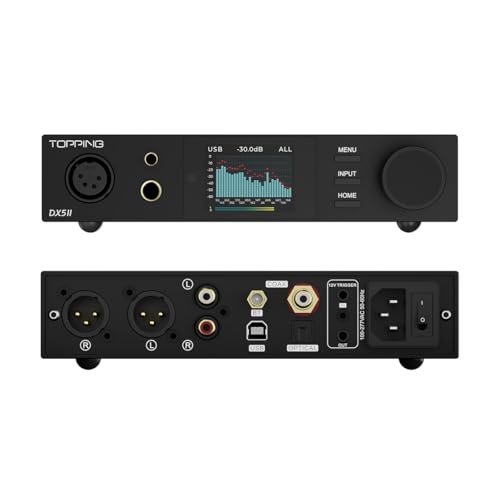
The DX5 II leads this guide because its listing is the most measurement-forward of the four: dual ES9039Q2M converters, a fully balanced headphone stage, and a ten-band parametric equaliser that can be left flat for checking or used to correct a known headphone. Three headphone outputs cover single-ended and balanced cables, and the balanced line output can feed monitors. For producers who want one box for headphone playback checks, it is the most complete specification here.
Specs
- Dual ES9039Q2M DAC chips
- Fully balanced DAC and headphone amp combo
- DSD512 native and PCM768kHz decoding
- 10-band PEQ
- 6.35mm single-ended, 4.4mm balanced and 4-pin XLR balanced headphone outputs
- Colour: Black
Best for: Producers who want measurement-led playback checking with balanced outputs and optional EQ.
Watch out for: Confirm the Black finish on the listing, since other finishes are sold under separate listings.
ASIN: B0FCFX4WW4
FiiO K9 Pro ESS Desktop DAC and Amplifier
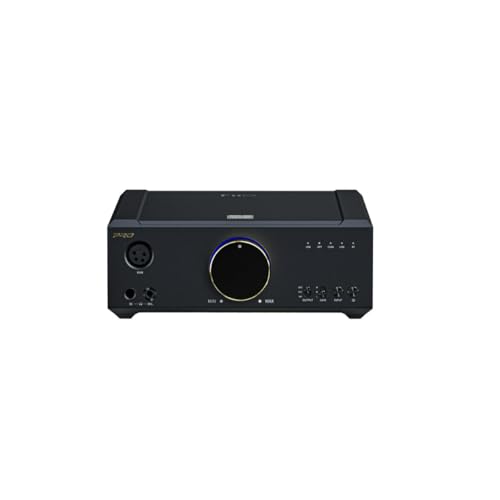
The K9 Pro ESS suits a settled studio desk where the headphone chain stays in place and balanced wiring is preferred throughout. Its listing stresses a precise, fully differential and fully balanced design, which fits the goal of keeping left and right channels matched during long playback sessions. An RGB indicator shows status at a glance. Choose it when your monitoring headphones use a balanced cable and you want the larger desktop unit in this group rather than a compact box.
Specs
- Desktop DAC and amplifier in one unit
- ESS configuration, as named in the product name
- Precise design, fully differential
- Fully balanced design
- RGB indicator lights
Best for: Engineers running balanced monitoring headphones from a fixed studio desk.
Watch out for: Check your desk depth and shelf space, since this is the largest and heaviest style of unit in this guide.
ASIN: B09XV3Z8WV
Topping DX3 Pro+ LDAC Headphone Amplifier

The DX3 Pro+ is the compact option for a smaller studio desk that still needs a proper digital input set. Its listing names USB, optical and coaxial inputs alongside Bluetooth 5.0 with LDAC, so a computer, a transport, and a phone can all reach the same headphone output. The ES9038Q2M converter and NFCA amplifier circuit are stated in the title, and a remote is included in the wider listing description. It suits playback checking where space, not output choice, is the main limit.
Specs
- ES9038Q2M DAC chip with XU208
- NFCA headphone amplifier circuit
- Bluetooth 5.0 with LDAC audio decoding
- USB, optical and coaxial inputs
- DSD512 DAC decoding
- Colour: Black
Best for: Small studio desks needing computer, transport, and phone sources on one headphone chain.
Watch out for: Confirm you need only the headphone outputs named on this listing, since it lacks the balanced sockets of the larger models.
ASIN: B09JC3TCJF
FiiO K7 Desktop DAC and Amplifier
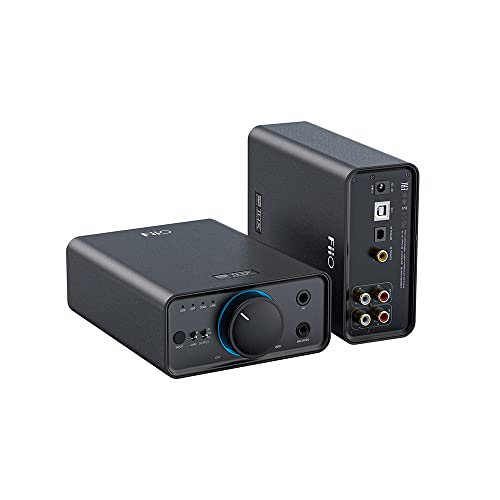
The K7 is the power-focused pick for monitoring headphones that a smaller output stage leaves sounding thin. Amazon listing text for this model describes a six-stage audio circuit with truly balanced analog and digital sections, and THX AAA 788+ amplification rated at 560mW into a 300 ohm load and 2000mW into a 32 ohm load. That makes it relevant for high-impedance studio headphones as well as lower-impedance pairs, while keeping conversion and amplification in a single desktop box.
Specs
- Desktop DAC and amplifier in one unit
- THX AAA 788+ amplifier, as printed in the listing text
- Output of 560mW into a 300 ohm load at 1 percent distortion, as printed
- Output of 2000mW into a 32 ohm load at 1 percent distortion, as printed
- Six-stage audio circuit with truly balanced analog and digital sections
Best for: Playback checking on high-impedance or otherwise demanding monitoring headphones.
Watch out for: Compare the exact K7 listing with the balanced variant listings, since FiiO sells similar models under separate codes.
ASIN: B0BJKKPL71
Which One Fits Your Situation
You Check Mixes on Balanced Headphones
Pick the Topping DX5 II or the FiiO K9 Pro ESS, since both listings centre on fully balanced design. The DX5 II adds the wider headphone socket choice and ten-band EQ, while the K9 Pro ESS suits a fixed desk. Either keeps conversion and headphone amplification in one unit, so the playback chain stays consistent between sessions.
Your Desk Is Small but Sources Are Many
Choose the Topping DX3 Pro+, whose listing names USB, optical, coaxial, and Bluetooth LDAC inputs in a compact unit. It covers a computer, a transport, and phone reference tracks without a separate DAC and amplifier stack. Accept that its headphone connections are simpler than the balanced models, and it will serve a small playback desk well.
Your Monitoring Headphones Are Hard to Drive
The FiiO K7 fits this situation because its listing prints output figures at both 300 ohms and 32 ohms, covering common studio impedances. Its THX AAA 788+ stage and truly balanced circuit aim at controlled drive rather than sheer loudness. Check your headphone impedance against those printed figures before ordering, rather than assuming any desktop unit will drive them equally.
You Also Feed Powered Monitors for Playback
The Topping DX5 II is the natural choice here, since its fully balanced design includes line outputs suited to feeding monitors alongside headphones. Keeping both playback paths on one converter means headphone checks and monitor checks share the same digital source. Confirm the line output type on the listing matches the inputs on your monitors before ordering.
Common Mistakes
- Buying a DAC-only or amplifier-only unit and discovering the other half of the chain is still missing.
- Expecting a DAC and amplifier combo to record audio; these units are for playback and monitoring, not microphone or instrument inputs.
- Judging output power from a single figure without checking the impedance that figure was quoted at.
- Ordering a balanced cable in 4.4mm when the chosen unit provides a four-pin XLR socket, or the reverse.
- Leaving an equaliser or bass boost engaged during playback checking, then mixing against a coloured headphone chain.
Frequently Asked Questions
Is a headphone DAC amplifier the same as an audio interface?
No. An audio interface records microphones and instruments and usually includes its own headphone output, while the units in this guide only convert digital audio and amplify it for headphones. If you track vocals or instruments, you still need an interface. These combos serve the playback side, giving that recorded work a cleaner, more consistent headphone check.
Why does balanced headphone output matter for studio playback?
Balanced output keeps the left and right channels on separate returns, which can support consistent channel balance when judging stereo image and panning decisions. It does not change the recording itself, and a good single-ended output can still check playback well. Balanced matters most when your monitoring headphones already have a balanced cable and you want that connection supported.
How much headphone output power do studio headphones need?
It depends on impedance and sensitivity, which is why the listings here print power at specific loads such as 32 ohms and 300 ohms. High-impedance studio headphones generally need more voltage, while sensitive models need less power but cleaner low-volume control. Compare your headphone specifications with the printed figures on the listing instead of chasing the largest number available.
Can I use one of these units with powered studio monitors?
Some can, when the listing names line outputs alongside the headphone outputs, as the fully balanced models here do. That lets one converter feed both monitors and headphones for consistent playback checks. Confirm the output sockets match your monitor inputs, and check whether the volume control governs the line output or leaves it fixed, before placing the unit in your chain.
Related guides
More from Amazon
Programs that pair well with the guide above. Offers and eligibility are set by Amazon and may change.
Free shipping on eligible items, Prime Video and more. Eligible new members can start with a free trial.
Start a Prime free trialAudiobooks and podcasts to listen to on the go. Eligible new members can start with a free trial.
Try Audible freeAd-free music streaming. Eligible new subscribers can start with a free trial.
Try Music Unlimited freeA free business account with business pricing and bulk-buying tools for work, shop or home office.
Create a business accountAs an Amazon Associate we earn from qualifying purchases.










Write Your Review
No reviews yet. Be the first to share your experience!